Dishwasher Not Draining? 7 Fixes to Try Before You Call a Technician
Standing water in the bottom of your dishwasher? Work through seven checks, from the filter and disposal to the drain hose and pump, in order of likelihood.
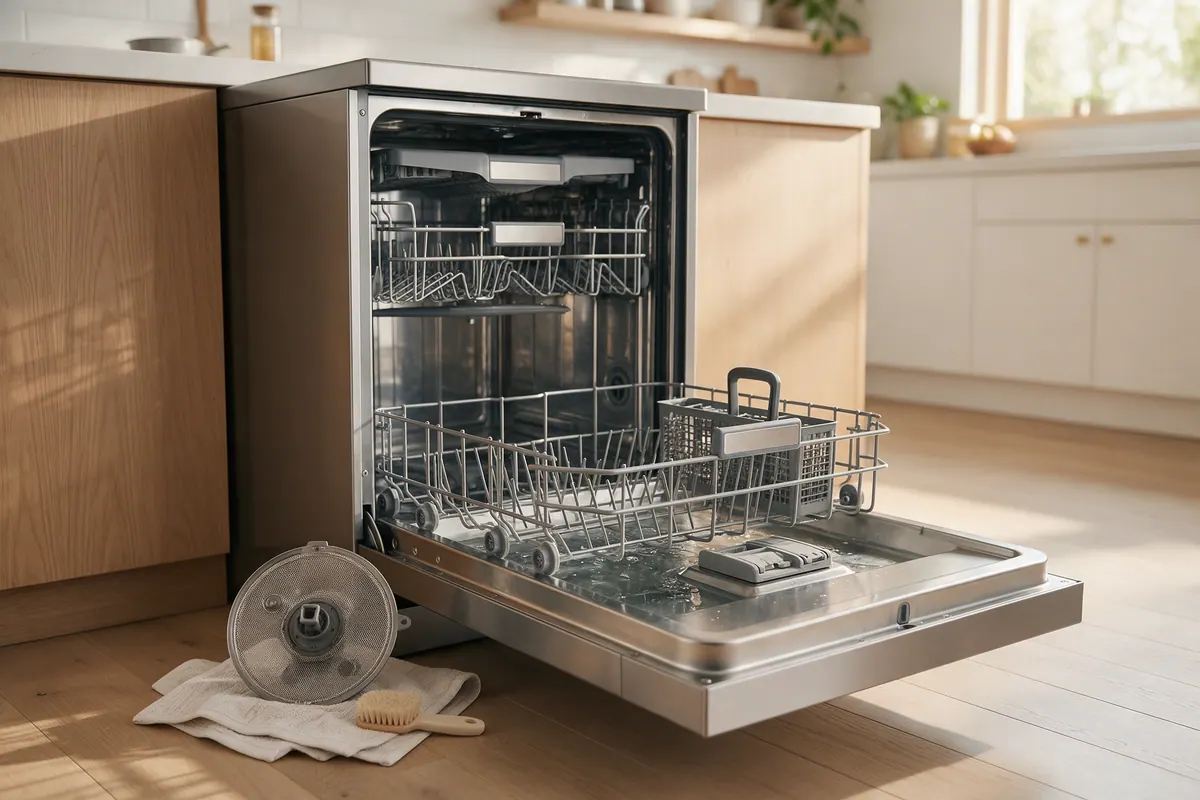
Standing water in a dishwasher almost always comes down to one of a few things: a clogged filter, a blockage where the dishwasher drains into the sink plumbing, or (less often) a failed drain pump. Work through the checks below in order. The first three solve most cases and take less than 20 minutes.
1. Make sure the cycle actually finished
If the door was opened mid-cycle, the power blinked, or someone hit Cancel, the dishwasher may have stopped before draining. Run a short Rinse or Drain cycle (check your manual; many models drain when you press Start/Cancel or Cancel/Drain). If the water goes away, there is nothing wrong.
2. Clean the filter (the most common cause)
Many dishwashers built in the last decade use a manual-clean filter instead of a self-cleaning grinder. These filters are quieter and more efficient, but they clog if they are never cleaned, and a clogged filter is the number-one reason water sits in the tub.
- Remove the bottom rack.
- Twist the cylindrical filter (usually a quarter turn counterclockwise) and lift it out, then remove the flat mesh screen under it.
- Rinse under warm running water and scrub gently with a soft brush and a drop of dish soap. Avoid wire brushes and scouring pads, which can tear the mesh.
- Look into the sump for glass shards, bones, fruit pits, or labels, and remove anything you find.
- Reinstall the screen and filter and turn until it locks.
Make this a monthly habit. It is on our maintenance calendar for a reason.
3. Check the garbage disposal
Most dishwashers drain through the garbage disposal or a branch tailpiece on the sink drain. If the disposal is packed with food waste, dishwasher water has nowhere to go. Run the disposal with cold water for several seconds after grinding stops.
Just installed a new disposal? New disposals come with a solid plastic knockout plug inside the dishwasher inlet. If the installer did not knock it out, the dishwasher cannot drain at all. With power off, look into the inlet nipple on the side of the disposal. If it is sealed, the plug is still there.
4. Inspect the drain hose
Under the sink, follow the corrugated drain hose from the dishwasher to the disposal or drain:
- Kinks or crushing: stored cleaning supplies often pinch the hose. Straighten it and reroute if needed.
- High loop or air gap: the hose should rise to a high loop fastened near the underside of the countertop, or connect through an air gap. Without one, dirty sink water can siphon back into the dishwasher. Some local plumbing codes require an air gap.
- Clogs: if you are comfortable, disconnect the hose at the disposal end (have a pan and towels ready) and check for a blockage.
5. Clean the air gap
If there is a small chrome or plastic cap on the back of the sink or countertop, that is an air gap. Pull off the cap and inner cover and clear any gunk with a small brush. A clogged air gap often shows up as water spilling out of it during the drain cycle.
6. Check the sink drain itself
If the kitchen sink drains slowly, the problem may be in the house plumbing rather than the dishwasher. Clear the sink drain or trap first. Remember: never pour chemical drain cleaner into the dishwasher.
7. Listen to the drain pump
Restore power and start a drain or short cycle, then listen at the bottom of the machine:
- Humming but no water moving: something may be jammed in the pump impeller (often glass or a seed). On many models the pump can be reached through the sump after removing the filter, but some require removing the dishwasher. If you cannot see an obstruction, stop here.
- No sound at all: the pump, its wiring, or the control board may have failed. This calls for testing with a multimeter and is a job for a technician.
When it is probably not a DIY fix
If the filter is clean, the disposal and hose are clear, and water still will not drain, the remaining causes (drain pump motor, check valve, wiring, or the control board) need proper diagnosis. Replacing parts by guesswork gets expensive fast.
Step-by-step summary
- Rule out a cycle that was interrupted. Many dishwashers leave some water behind if a cycle was paused or canceled. Run a short Rinse or Drain cycle (or press Start/Cancel per your manual) and see if the water clears.
- Turn off power and remove standing water. Switch off the breaker or unplug the dishwasher. Remove the bottom rack and bail out the water with a cup, then soak up the rest with towels.
- Clean the filter. Twist out the cylindrical filter, lift out the flat screen, and rinse both with warm water and a soft brush. Reinstall until it locks.
- Check the garbage disposal. Run the disposal to clear food waste. If the disposal was just installed, confirm the drain knockout plug inside the disposal inlet was removed.
- Inspect the drain hose. Under the sink, follow the drain hose for kinks or crushing. Confirm it has a high loop or connects through an air gap so dirty water cannot siphon back.
- Clean the air gap. If there is a chrome air gap cap on the sink deck, pull off the cap and cover and clear any debris inside.
- Listen to the drain pump. Restore power and start a Drain cycle. A humming pump that moves no water may be jammed by debris; silence can mean a failed pump or control issue that needs a technician.
Tools and supplies mentioned
Affresh Dishwasher Cleaner Tablets, 6 count
by Affresh
Once the drain is clear, a monthly cleaning tablet helps keep limescale and food residue from building up.
Frequently asked questions
Is a little water in the bottom of the dishwasher normal?
On many models, a small amount of clean water around the sump (below the filter) is normal and keeps seals moist. Water that covers the tub floor or is dirty and smelly after a completed cycle is not normal.
Can I use drain cleaner in my dishwasher?
No. Chemical drain cleaners can damage dishwasher seals, hoses, and pumps. Clean the filter and check the hose, disposal, and air gap instead.
Why did my dishwasher stop draining right after a new garbage disposal was installed?
New disposals ship with a knockout plug in the dishwasher inlet. If the plug was not knocked out during installation, the dishwasher cannot drain into the disposal.
How much does it cost to replace a dishwasher drain pump?
It depends on the brand, model, and local labor rates. Ask for a diagnosis and written estimate first; a reputable technician will tell you if replacement makes more sense than repair.