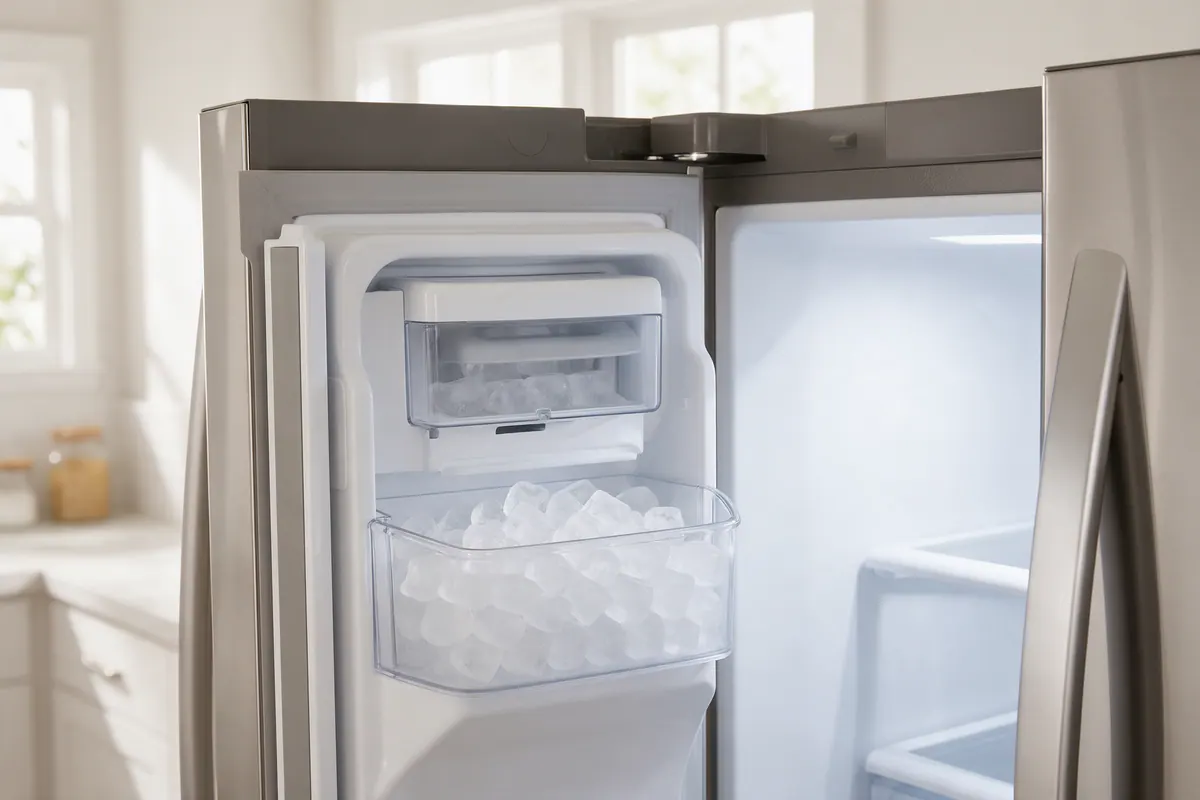
Refrigerator Ice Maker Not Working? 8 Fixes to Try First
Ice maker not making ice? Check the power switch, water supply, filter, freezer temperature, and ice jams with these eight fixes based on manufacturer guidance.
How to read an appliance error code, find your model number, and look up the official meaning, plus our code guides by brand and safe first steps.
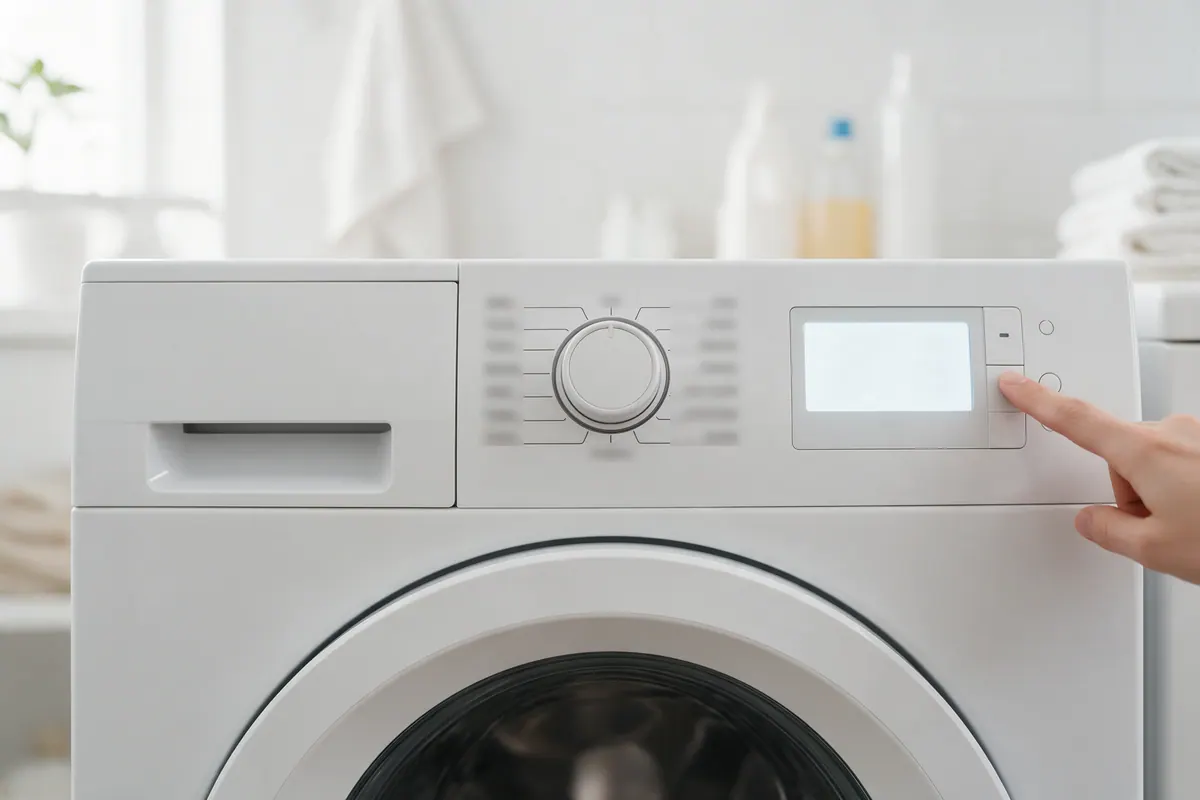
Short answer: an error code tells you which system the appliance thinks has a problem (water supply, draining, door lock, heating, a sensor), not which part has failed. Write the code down exactly as shown, find your model number, and look the code up in your manual or on the manufacturer's support site. Many fill, drain, and door codes clear after a simple check; a code that keeps returning needs diagnosis.
Ice maker not making ice? Check the power switch, water supply, filter, freezer temperature, and ice jams with these eight fixes based on manufacturer guidance.
Plain-English guide to Whirlpool front-load washer codes, including F5 E2, F8 E1, F9 E1, F7 E1, Sud, and Int, and what to check before calling for service.
Many problems never show a code. These guides walk through symptoms in order of likelihood.
Electric oven won't heat or reach temperature? Work through seven checks, from the breaker and control lock to the bake element, door seal, and sensor.
A musty or mildew smell in your washer usually comes from trapped moisture and detergent residue. Here's how to clean it out and keep the odor from coming back.
Standing water in the bottom of your dishwasher? Work through seven checks, from the filter and disposal to the drain hose and pump, in order of likelihood.
Brands use different letters and numbers, but most codes fall into a handful of families. Examples below are from Whirlpool front-load washers, per Whirlpool's product-help documentation; check your own model's list.
| Code family | What it usually means | Example | First things to check |
|---|---|---|---|
| Water supply / fill | Not enough water reached the appliance in time | Whirlpool washer F8 E1 / LO FL | Supply valves fully open, fill hoses not kinked, inlet screens clear |
| Drain | Water did not drain in the expected time | Whirlpool washer F9 E1 | Drain hose kinks or clogs, pump/coin-trap filter, excess suds |
| Door or lid lock | The door did not lock or the control cannot confirm it is closed | Whirlpool washer F5 E2 | Clothing or debris in the door or gasket; close firmly and clear the code |
| Suds | Too many suds for the washer to rinse or drain normally | Whirlpool washer Sud / Sd | Use HE detergent in the measured amount |
| Motor / speed | The motor could not reach or hold the expected speed | Whirlpool washer F7 E1 | Shipping bolts removed after install, washer not overloaded |
| Sensor or control | A temperature sensor, switch, or the control board reported an out-of-range value | Varies by brand | Reset once; if it returns, a technician should test the sensor and wiring before replacing the board |
| Status, not a fault | A lock or paused state | Whirlpool washer LOC (control lock), Int (cycle interrupted) | Turn off the control lock; restart the cycle |
Full meanings and fixes: Whirlpool front-load washer error codes.
Search these support sites by model number for the manual and the code list for your exact appliance. Links were checked on October 3, 2026.
| Brand | Official support site |
|---|---|
| Whirlpool | producthelp.whirlpool.com |
| Maytag | producthelp.maytag.com |
| KitchenAid | producthelp.kitchenaid.com |
| Amana | producthelp.amana.com |
| JennAir | producthelp.jennair.com |
| GE Appliances (GE, GE Profile, Café, Monogram, Hotpoint) | www.geappliances.com/ge/service-and-support |
| Samsung | www.samsung.com/us/support |
| LG | www.lg.com/us/support |
| Frigidaire / Electrolux | owner.frigidaire.com |
| Bosch | www.bosch-home.com/us/support |
A reset (cutting power for a minute or more, or the button sequence in your manual) is safe and often clears a one-time glitch. If the same code comes back, the appliance is reporting a real fault, so fix the cause instead of resetting repeatedly. Never reset or keep using an appliance that smells of gas or burning, sparks, or is leaking near electrical parts.
No. Codes are set by each manufacturer and often differ between product lines and model years of the same brand. Always look up the code for your exact model number in the owner's manual or on the manufacturer's support site.
Look for the rating label: inside the door frame or on an interior side wall of refrigerators, on the edge of the door or tub opening of dishwashers, under the lid or around the door opening of washers and dryers, and behind the storage drawer or oven door of ranges. Take a photo of the label so you have the model and serial numbers when you look up codes or call for service.
Call a technician when a code returns after you have done the simple checks for that code, when the fix involves gas, sealed refrigeration systems, or live electrical parts, or when the appliance is under warranty. Write down the exact code and what the appliance was doing when it appeared; it speeds up diagnosis.