Home Home Appliance Maintenance Calendar Home Appliance Maintenance Calendar A monthly, quarterly, twice-yearly, and annual maintenance checklist for refrigerators, dishwashers, washers, dryers, and more, with step-by-step instructions.
Frequencies below are common manufacturer guidance. Your owner's manual is the final word for your specific model. Before any task, disconnect power (and gas or water where relevant).
Monthly Quick jobs, most under 15 minutes, that prevent odors, clogs, and slow performance.
Clean the dishwasher filter Dishwasher Why: Many newer dishwashers use a manual-clean filter. A clogged filter causes poor cleaning, odors, and standing water.
Remove the bottom rack. Twist out the cylindrical filter (usually a quarter turn counterclockwise) and lift out the flat screen beneath it. Rinse under warm water and scrub gently with a soft brush. Do not use wire brushes. Reinstall the filter and lock it fully into place. Read the full guide →
Run a washer cleaning cycle Washer Why: Detergent residue and moisture lead to odors and mildew, especially in front-load washers.
Empty the drum. Add a washer cleaner tablet or the cleaner your manual recommends. Run the Clean Washer (or hottest Normal) cycle. On front-loaders, wipe the door gasket folds dry and leave the door ajar afterward. Flush the garbage disposal Garbage disposal Why: Built-up food waste can slow drainage, which also slows dishwasher draining when they share a drain.
Run cold water and turn the disposal on. Let it run for several seconds after grinding stops. Clean the splash guard with a brush and mild soap with the power off. Every 3 months Seasonal checks that catch small problems before they become service calls.
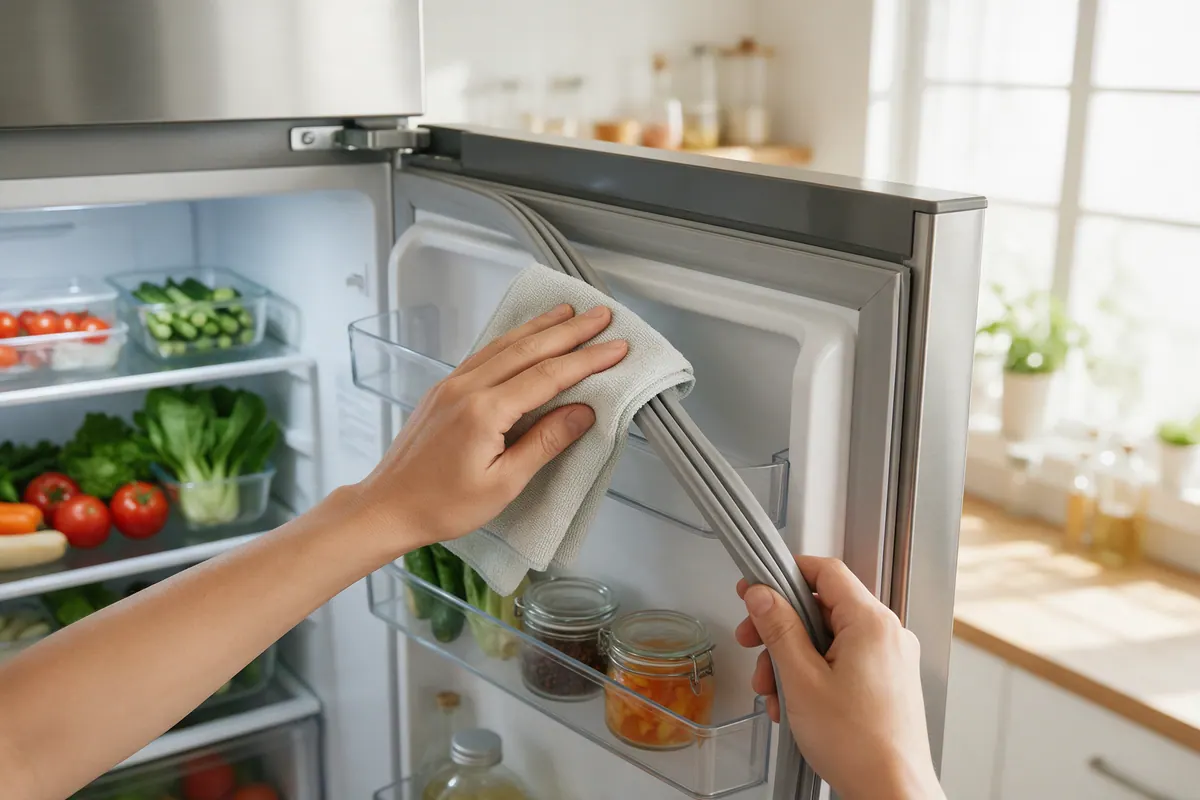
Clean and test refrigerator door gaskets Refrigerator Why: Leaky seals let warm, humid air in, which makes the refrigerator run longer and can cause frost.
Wipe the gaskets with warm water and mild dish soap; dry them. Close the door on a dollar bill. If it slides out with no resistance, that section is not sealing. Check for tears or flattened sections; replace a damaged gasket. Read the full guide →
Inspect washer fill hoses Washer Why: A burst fill hose can release a large amount of water quickly.
Pull the washer out enough to see the hoses. Look for bulges, cracks, kinks, or rust at the fittings. Replace damaged hoses, ideally with braided stainless steel hoses. Clean the range hood grease filter Range hood Why: Grease-clogged filters reduce ventilation and are a fire hazard.
Turn off the hood and let it cool. Remove the metal mesh filters. Soak in hot water with degreasing dish soap, scrub, rinse, and dry before reinstalling. Every 6 months Filters and coils: the two jobs with the biggest effect on efficiency and lifespan.
Replace the refrigerator water filter Refrigerator Why: Most refrigerator filter makers rate filters for about 6 months; old filters reduce flow and filtration.
Find your filter model in the owner’s manual or on the old filter. Remove the old filter (twist or push-release, depending on model). Install the new filter and run several gallons through the dispenser to purge air and carbon fines. Reset the filter indicator if your model has one. Read the full guide →
Clean refrigerator condenser coils Refrigerator Why: Dusty coils make the compressor work harder. Homes with pets may need this more often.
Unplug the refrigerator. Locate the coils (behind the bottom kick plate or on the back, depending on model). Use a coil brush and vacuum to remove dust and pet hair. Plug the refrigerator back in. Read the full guide →
Annually Once-a-year safety and performance jobs. Put them on the calendar.
Clean the full dryer vent duct Dryer Why: Failure to clean is a leading cause of home dryer fires, according to NFPA.
Unplug the dryer (and shut off gas for gas dryers). Disconnect the transition duct from the dryer. Run a rotary vent brush through the duct to the exterior hood. Clear the exterior flap and confirm it opens freely when the dryer runs. Read the full guide →
Inspect the dishwasher drain hose and door seal Dishwasher Why: Kinked hoses cause draining problems; a worn door seal causes leaks.
Check the drain hose under the sink for kinks and a proper high loop or air gap. Inspect the door seal for cracks or debris and wipe it clean. Read the full guide →
Check that the washer and refrigerator are level Washer & refrigerator Why: An unlevel washer vibrates and wears parts; an unlevel refrigerator can keep doors from sealing.
Place a level on top of the appliance side to side and front to back. Adjust the leveling feet until level; many refrigerators should tilt slightly back so doors swing closed (check your manual). Tighten lock nuts on washer feet. Maintenance supplies we reference Affiliate disclosure: As an Amazon Associate I earn from qualifying purchases. Some links on this page are affiliate links. If you buy through them, we may earn a commission at no extra cost to you. This never changes what we recommend. Learn more .
Gardus LintEater RLE202 Rotary Dryer Vent Cleaning Kit
by Gardus
Drill-powered rotary brush with screw-together rods for the annual dryer vent cleaning.
Fit check: Fits standard 4-inch dryer ducts; requires a cordless drill.
Check price on Amazon everydrop by Whirlpool Refrigerator Water Filter 1 (EDR1RXD1)
by everydrop by Whirlpool
Genuine replacement for refrigerators that take Filter 1.
Fit check: Only for models that use Filter 1 (replaces W10295370A). Check your manual first.
Check price on Amazon Affresh Dishwasher Cleaner Tablets, 6 count
by Affresh
Monthly cleaning tablet for removing limescale and odor-causing residue.
Check price on Amazon Affresh Washing Machine Cleaner Tablets, 6 count
by Affresh
Monthly washer cleaning tablet for front-load and top-load washers.
Check price on Amazon Frequently asked questions How often should I clean my dryer vent? Clean the lint screen every load and have the full vent duct cleaned at least once a year, more often if drying times get longer or the duct is long or has many bends.
How often should I change my refrigerator water filter? Most manufacturers rate their filters for about six months (or a stated number of gallons). Follow the rating printed on your filter or in your manual.
How often should refrigerator coils be cleaned? A common recommendation is at least once or twice a year, and more often in homes with pets or a lot of dust. Unplug the refrigerator first.
Does regular maintenance really prevent repairs? It prevents many of the most common service calls: clogs, poor cleaning, overheating dryers, and refrigerators running constantly. It will not prevent every component failure, so call a technician when a problem persists.
When to call a pro Call a qualified technician if:
A maintenance check turns up a leak, burning smell, or damaged wiring Your refrigerator still runs warm after cleaning coils and checking gaskets Your dryer still takes more than one cycle to dry after the vent is cleaned You would rather have a technician do an annual check-up Our recommended repair service
VIA Appliance
Request a repair with VIA Appliance Call (410) 451-4104
Outside that area? Look for a licensed, insured technician with factory training on your brand. How we choose recommended pros . VIA Appliance is a featured repair partner of Appliance Insider.