How to Descale a Coffee Maker or Espresso Machine (Keurig, Drip and De'Longhi): How Often and What to Use
How to descale a coffee maker: use the maker's descaler or your manual's vinegar mix, run it through, then rinse with fresh water. Keurig says every 3-6 months.
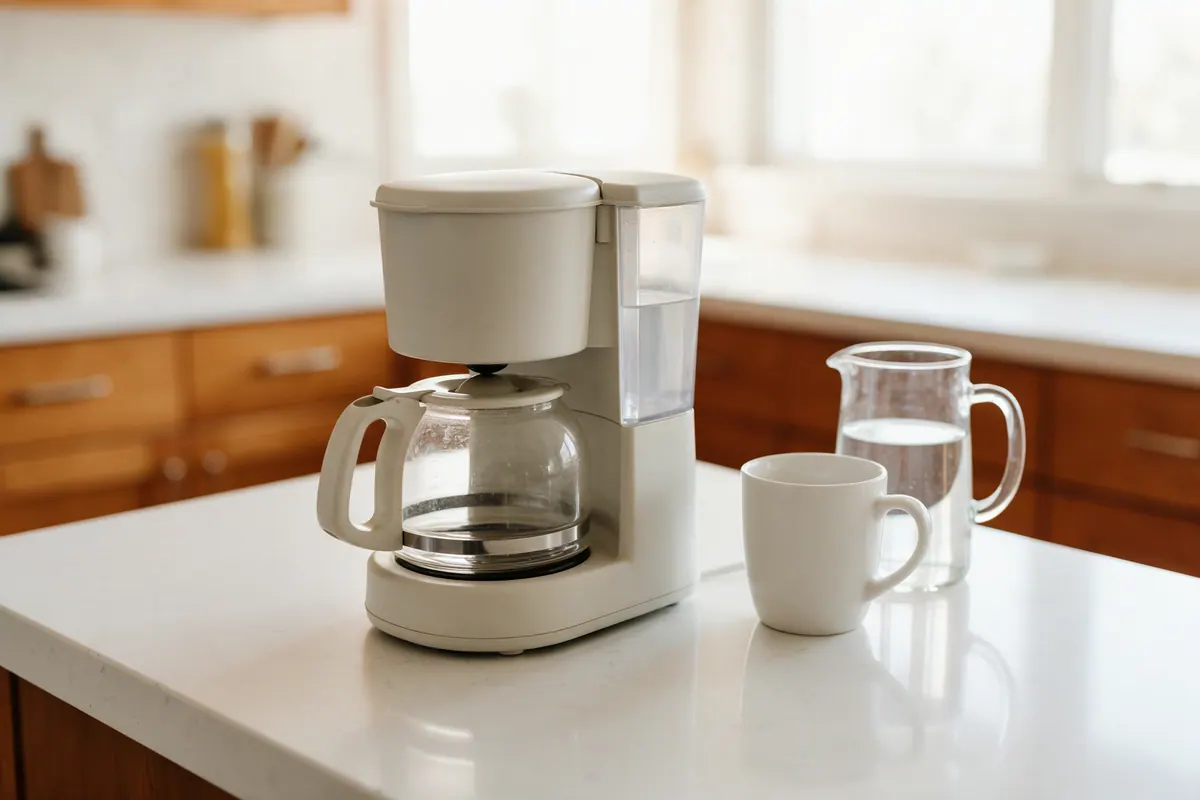
To descale a coffee maker, empty it and remove the water filter, fill the reservoir with the maker’s descaling solution (or white vinegar and water, but only if your manual allows it), run it through without coffee, then rinse with several brews of fresh water. Keurig recommends doing this every 3 to 6 months, Cuisinart says every 1 to 3 months depending on how hard your water is, and machines with a descale light will tell you when. Espresso machines are the exception to the vinegar shortcut: De’Longhi says vinegar isn’t recommended for them and to use its own descaler.
Scale is the chalky mineral layer hard water leaves inside the heater and tubing. It’s worth dealing with before the holidays, when the machine is brewing for a houseful of guests. Here is how often to do it, what to use, and the steps for pod brewers, drip machines and espresso machines.
Coffee maker descaling schedule at a glance
| Task | How often | Source |
|---|---|---|
| Descale a Keurig pod brewer | Every 3 to 6 months, or when the brewer prompts; more often with hard water | Keurig |
| Descale a Keurig K-Duo | Every 3 months | Keurig K-Duo Use & Care Guide |
| Descale a drip coffee maker | Every 1 to 3 months depending on water hardness | Cuisinart |
| Descale a De’Longhi espresso machine | Whenever the machine prompts, based on the water hardness setting and use | De’Longhi |
| Rinse or replace a charcoal water filter (Cuisinart) | Every 60 days or 60 uses | Cuisinart |
Your own manual wins over any general schedule. You can also add these reminders to our appliance maintenance calendar.
How do you know a coffee maker needs descaling?
Most newer machines tell you. Keurig brewers show a “Time to descale the brewer!” prompt, which Keurig says tracks how much liquid has passed through the system. If you postpone it, the brewer reminds you again in 6 weeks, and the reminder only goes away once you actually descale. De’Longhi machines flag it with an alarm or indicator light.
If the prompt has been ignored, the coffee usually tells you. De’Longhi lists these signs of limescale buildup:
- Coffee that isn’t as hot as usual
- Thinner, less consistent crema
- Changes in coffee flavor
De’Longhi adds that scale can make the machine take longer to heat water and brew more slowly, and in advanced cases cause blockages or malfunctions. Keurig says the deposits themselves are non-toxic; the issue is that they hinder the brewer.
Descaler or vinegar: what should you use?
The safe answer is whatever your manual names. The makers don’t agree, because the machines are different.
- Keurig: its instructions are written for Keurig Descaling Solution, used with a large ceramic mug, not a paper cup.
- De’Longhi: it recommends only De’Longhi descaler for its coffee machines (Decalk Care or EcoDecalk, depending on the instructions). It says vinegar can leave lingering odors and over time may be too harsh for some internal parts, and that citric acid only works if the dilution is exactly right.
- Cuisinart drip coffee makers: Cuisinart’s cleaning guide uses white vinegar diluted with water. The guide gives both a 1-to-3 and a 1-to-2 vinegar-to-water mix in different sections, so use the ratio printed in your model’s manual.
How to descale a Keurig coffee maker
Keurig’s button sequence changes from model to model, so look up your brewer on Keurig’s descaling page before you start. The overall process is the same:
- Get a large ceramic mug, fresh water, Keurig Descaling Solution and access to a sink. Make sure there’s no pod in the pod holder.
- Empty the water reservoir and remove the water filter if you use one.
- On many models, pour the whole bottle of descaling solution into the empty reservoir, then fill the empty bottle with water and add that too.
- Put the brewer in descale mode (the method depends on the model), place the mug on the drip tray, and brew. Pour the hot liquid into the sink and repeat until the brewer asks for water.
- Rinse the reservoir, fill it to the max line with fresh water, and run rinse brews until the descale notification turns off.
Time varies a lot. Keurig allows about 15 to 20 minutes on the K-Brew+Chill, while the K-Duo procedure, which rinses both the single-cup side and the carafe and includes a 30-minute rest, takes about 75 minutes.
How to descale a drip coffee maker
- Unplug the coffee maker if you’re doing more than a quick clean, empty the old grounds, and rinse the carafe and filter basket.
- Remove the charcoal water filter from the reservoir.
- Fill the reservoir with the descaling mix your manual gives. On Cuisinart drip models, that’s white vinegar diluted with water.
- If your machine has a Clean button, press and hold it until the light flashes. Cuisinart says that on most of its coffee makers the cycle ends with five beeps and the light turning off; if the light comes back on, repeat with a fresh mix. Without a Clean button, Cuisinart says to run a normal brew without coffee, pause it halfway, let the mix sit for 30 minutes, then finish the cycle.
- Run at least one full cycle of fresh water to rinse out the vinegar, more if you can still smell it.
- Wash the carafe and filter basket in warm, soapy water, and put a fresh or rinsed water filter back in.
Cuisinart says to rinse or replace the charcoal filter every 60 days or 60 uses, which also cuts mineral buildup.
How to descale an espresso machine (De’Longhi example)
De’Longhi says its machines with a display walk you through descaling on screen, and those with icon controls follow the steps in the quick guide or manual. Its general procedure:
- Make sure the machine is actually asking to be descaled, then have De’Longhi descaler and a container that holds at least 68 fl oz (2 L) ready.
- Put the container under the coffee spouts and the hot water spout.
- Empty the drip tray and grounds container and put them back.
- Empty the water tank and remove the filter, if there is one.
- Pour in descaler to the level A mark (100 ml, or 3.4 fl oz, of EcoDecalk on the machines its guide describes), then add water to level B.
- Start the descaling cycle from the menu or button your model uses. If your machine has a milk carafe, De’Longhi says to attach the water spout.
- When the machine asks, run the rinse cycle or cycles.
The whole process takes 30 to 50 minutes depending on the model. De’Longhi notes that finding some water in the grounds container afterward is normal.
How to make scale build up more slowly
- Set the water hardness on machines that ask for it. De’Longhi says the setting directly affects how often you need to descale, so set it for your local water.
- Use filtered water. Keurig recommends filtered or bottled water because descaling frequency depends on your water’s mineral content, and Cuisinart says filtered water reduces buildup.
- Keep the filter fresh. Use the maker’s water filter where your model takes one, and replace it on schedule.
- Don’t postpone the prompt forever. The machine is counting for you.
If your coffee maker needs descaling far more often than the manual suggests, Cuisinart says that may be a sign to test your water hardness.
Signs it’s time for a repair, not another descale
Descaling fixes scale, not every brewing problem. Stop and check the warranty or contact the maker’s service center if:
- The descale light comes back right after a full descale and rinse, and repeating it doesn’t clear it.
- The machine still won’t pump water, or only sputters, after the maker’s heavy-scale steps.
- It leaks from the base or under the machine, trips a breaker, smells like burning, or the power cord is damaged.
- The coffee is still cold or the brew is still slow after a proper descale.
For other kitchen upkeep before the holidays, see how to clean your oven before the holidays. If you’re shopping for a new machine, our Keurig Alta release date and price guide, Chefman Coffee Station Pro vs. Coffee Station and Breville Spiral Luxe vs. Grind Control comparisons cover current models.
Step-by-step summary
- Check your manual and the descale prompt. Find your model's descaling steps in the manual or on the maker's support page, since button sequences, ratios and rinse counts differ by model. Many machines show a descale light or message when it's time.
- Empty the machine and remove the water filter. Empty the water reservoir, the drip tray and any grounds container, take out the water filter if there is one, and make sure there's no pod or ground coffee in the brewer.
- Add the descaling solution. Pour in the maker's descaler and the amount of water its instructions give. Use white vinegar only if your manual says it's allowed, at the ratio the manual gives.
- Run the descaling cycle. Set a large ceramic mug, the carafe, or a container of at least 68 fl oz (2 L) under the outlets, start the descale or clean cycle, and pour the hot liquid into the sink after each brew.
- Rinse with fresh water. Empty and rinse the reservoir, refill it with fresh water, and run the rinse brews your manual calls for until the descale indicator turns off.
- Put the filter back and slow the next buildup. Reinstall or replace the water filter, and use filtered water if you have hard water so scale builds up more slowly.
Frequently asked questions
How often should you descale a coffee maker?
Keurig recommends descaling every 3 to 6 months, and Cuisinart says every 1 to 3 months depending on water hardness. Machines with a descale indicator, such as many De'Longhi espresso machines, tell you when based on your water hardness setting and how much you brew.
Can I descale my coffee maker with vinegar?
Only if your manual allows it. Cuisinart's own cleaning guide uses white vinegar diluted with water on its drip coffee makers, but De'Longhi says vinegar isn't recommended for espresso machines because it can leave odors and may be too harsh for internal parts.
What happens if you never descale a coffee maker?
Mineral scale builds up inside the water path. De'Longhi says this can make the machine take longer to heat water, brew more slowly and make less crema, and in more advanced cases cause blockages or malfunctions.
Why does my Keurig keep saying to descale?
Keurig says the reminder tracks how much liquid has passed through the brewer, and it only goes away once the brewer has actually been descaled. If you postpone it, the brewer reminds you again in 6 weeks.
How long does it take to descale an espresso machine?
De'Longhi says its descaling process takes 30 to 50 minutes depending on the model, including the rinse. Keurig's times vary by brewer, from about 15 to 20 minutes on some models to about 75 minutes on the K-Duo.
Is limescale in a coffee maker harmful?
Keurig says calcium deposits and scale are non-toxic. The problem is performance: left alone, scale can hinder how the brewer heats and brews.