How to Clean Your Oven Before the Holidays: Self-Clean, Steam, or by Hand
Clean your oven weeks before holiday cooking: when to use self-clean, steam clean, or a baking soda hand clean, plus the prep steps manufacturers require.
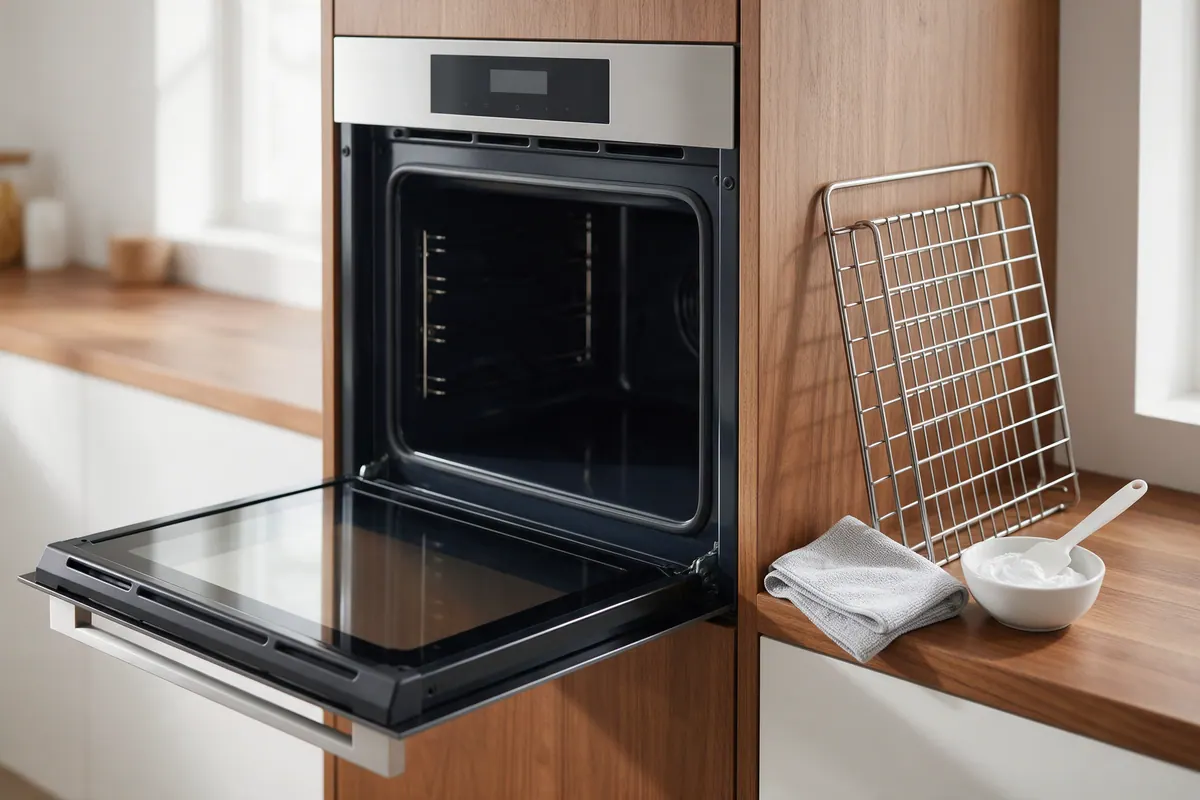
The best time to clean your oven for the holidays is now, several weeks before the big meal, not the night before. Use the self-clean cycle for heavy, baked-on grime, a steam clean for light recent spills, and a baking soda paste if your oven has neither or you would rather avoid the high-heat cycle. Whichever you choose, the prep is the same: empty the oven, wipe out loose soil, and follow your owner’s manual.
Why the timing matters: a high-temperature self-clean cycle heats the oven far beyond normal cooking. GE Appliances says its ovens reach about 880°F (471°C) during the cycle. If the oven acts up afterward, you want weeks, not hours, to get it looked at before you need it for a turkey.
Quick reference
| Task | How often |
|---|---|
| Wipe up spills | As soon as the oven is cool enough to touch safely |
| Steam clean (if your oven has it) | After light spills, between deep cleans |
| Deep clean, by self-clean or by hand | Every 3 to 6 months (Whirlpool’s guideline), or before soil gets heavy |
| Self-clean before holiday cooking | Several weeks before the event |
| Soak and scrub the racks | With each deep clean |
Self-clean, steam clean, or hand clean: which should you use?
| Method | Best for | Typical time | Watch out for |
|---|---|---|---|
| High-heat self-clean | Heavy, baked-on grease and spills | Varies by model; GE manuals list 3 to 5 hours, plus cool-down | Smoke and odor, locked door until cool, birds, racks that must come out |
| Steam clean | Light, recent spills on the oven floor | About 1 to 1.5 hours on Whirlpool models that offer it | Not meant for heavy soil; use distilled or filtered water |
| Baking soda hand clean | Ovens without a clean cycle, or anyone avoiding high heat | 20 minutes to overnight of soaking, plus wiping | Keep paste off heating elements; more elbow grease |
Whirlpool’s guidance sums it up: self-clean is for heavy, baked-on residue, and steam clean is for lighter spills and more frequent touch-ups because it uses lower heat and a shorter cycle.
1. Prep the oven (every method)
- Turn the oven off and let it cool completely.
- Remove everything: racks, broiler pan, pizza stone, probes, pans stored inside, foil, and silicone mats. GE Appliances warns that foil or mats left in during self-clean can damage the oven.
- Wipe out loose crumbs and any liquid grease that is not baked on. GE says to do this with a wet cloth, without cleaning products, when you are preparing for self-clean.
- Hand-clean the inside edge of the door and the strip about 1½ inches (3.8 cm) around the oven opening. Whirlpool notes this area does not get hot enough to clean during self-clean. Use a damp cloth and keep liquid out of the slots in the door frame.
- Leave the door gasket alone. Whirlpool and GE both say not to rub, move, or damage it, because the gasket is what seals the door.
2. Run the self-clean cycle the right way
Decide on the racks. Most racks should come out. GE Appliances says dark enameled racks labeled “self-clean” can stay in, while shiny or silver racks should be removed because they can discolor and warp slightly. Your manual tells you which kind you have.
Ventilate and protect pets. Open a window or run the range hood fan. GE’s manuals note that the oven’s fiberglass insulation gives off a very small amount of carbon monoxide during the cycle, and venting minimizes exposure. Whirlpool warns that some birds are extremely sensitive to self-clean fumes and that exposure may kill certain birds, so move birds to another closed, well-ventilated room first. Don’t block the oven vent.
Set the time for the soil level. Clean times vary by model. One GE electric range manual sets 4 hours by default and allows 3 to 5; one Whirlpool wall oven guide suggests 3 hours for light soil, 4 for medium, and 5 for heavy. Whirlpool also advises self-cleaning before the oven becomes heavily soiled, because heavy soil means longer cleaning and more smoke. On double ovens, GE says you can’t self-clean both cavities at once or bake in one while the other cleans.
Stay home and expect some smoke. A little smoke is normal as soil burns to ash. If you see flames inside the oven, GE’s instructions are to turn the oven off, let it cool for at least an hour, fix what caused it (usually heavy grease or something left inside), and then restart the cycle. Do not open the door.
Let it unlock on its own. The door locks automatically and stays locked until the oven cools. GE says cooling can take 30 to 90 minutes after the cycle ends, and the cooling fan may keep running. Never force a locked door.
Wipe out the ash. Once the oven is cool, wipe the ash with a damp cloth. GE suggests a water and vinegar mix for heavier ash. Whirlpool warns not to put a cool damp cloth on the inner door glass before it has completely cooled, because the glass can break.
3. Use steam clean for light spills
Steam clean is a maintenance cycle, not a deep clean. On Whirlpool models that have it, the cycle runs about 1 to 1.5 hours.
- Start with a cool oven and remove the racks and accessories (some models let racks stay in; check your manual).
- Wipe out loose crumbs.
- Select the steam clean cycle. Some models ask you to add water after you set the cycle.
- Pour distilled or filtered water onto the oven floor in the amount your manual specifies. Whirlpool recommends filtered or distilled water to avoid mineral spots and says generally not to exceed 2 cups.
- When the cycle ends, let the oven cool completely, then sponge out the water and loosened soil. Use baking soda paste or a non-abrasive pad on anything left.
No steam cycle? Whirlpool suggests setting the oven to 450°F (232°C) for 20 minutes with an oven-safe pot of water on the lowest rack, then wiping it out once the oven is completely cool.
4. Clean by hand with baking soda
This is the method for ovens without a clean cycle, or for spot-cleaning between cycles.
- Place old towels under the door to catch drips.
- Mix ½ cup of baking soda with 3 tablespoons of water into a thin, spreadable paste, per Whirlpool’s instructions.
- Spread it over the top, sides, bottom, and inside of the door with a silicone spatula or brush. Keep it off the heating elements and the door gasket.
- Let it sit anywhere from 20 minutes to overnight, depending on how dirty the oven is. For stubborn spots, Whirlpool says the paste can stay on for 12 to 24 hours.
- Spray with white vinegar or lemon juice and wipe with a damp cloth. Use a plastic scraper on stuck spots. Repeat until no paste remains.
- Clean the inner door glass the same way and dry it with a soft cloth.
Whirlpool’s guidance for self-clean ovens and GE’s both say no commercial oven cleaners. If your oven has no self-clean cycle and you use a commercial cleaner anyway, follow the product label and your oven manual exactly.
5. Soak and scrub the oven racks
- Put the cooled racks in a utility sink or a bathtub lined with old towels to prevent scratches.
- Cover them with hot water and add ½ cup of mild dish soap (or ¾ to 1 cup of laundry detergent), then soak for at least two hours or overnight.
- Scrub with a stiff-bristled brush or a steel wool pad, then rinse well.
- Dry completely to help prevent rust.
- If the racks stick when you slide them back in, Whirlpool suggests a light coat of vegetable or cooking oil on the rack guides.
While the oven is clean, it’s a good time to wash the range hood grease filters too; they’re on our appliance maintenance calendar.
Signs it’s time for a repair, not another cleaning
- The door won’t unlock even though the oven has been off and cool for well over an hour
- The display goes dark, or the oven stops heating, after a self-clean cycle
- The door won’t lock, so the self-clean cycle won’t start
- An error code appears during or after the cycle and returns after power is restored
- The oven no longer reaches or holds temperature (see our electric oven not heating checklist)
- The door gasket is torn, flattened, or loose, letting heat escape
If the self-cleaning mode malfunctions, GE’s manual says to turn the oven off, disconnect the power, and have it serviced by a qualified technician. Don’t try to defeat the door lock or open the back panel yourself; the lock and the oven’s thermal safety parts exist to protect you. If your range is near the end of its life, our repair or replace guide and gas vs. electric vs. induction buying guide can help you decide what’s next. More range care is in our range and oven hub.
Step-by-step summary
- Pick the right method. Use self-clean for heavy, baked-on soil, steam clean for light recent spills, and a baking soda hand clean if your oven has neither or you prefer it. Check your owner's manual for what your model supports.
- Schedule it weeks before the holiday. Run any high-heat self-clean cycle several weeks before a big cooking day, so there is time to get a repair if the oven has a problem afterward.
- Empty and prep the oven. With the oven off and cool, remove racks, pans, probes, foil, and liners, and wipe out loose crumbs and liquid grease. Hand-clean the door edge and the frame around the opening without rubbing the door gasket.
- Run self-clean with the kitchen ventilated. Close the door, select the clean time for your soil level, and start the cycle with a window open or the hood fan on. Move pet birds to another closed, well-ventilated room.
- Wipe out the ash after it cools. Wait for the door to unlock on its own, then wipe the ash out with a damp cloth or a water and vinegar mix. Do not wipe the inner door glass until it has completely cooled.
- Hand clean with baking soda paste. Mix 1/2 cup baking soda with 3 tablespoons of water, spread it inside the cool oven, and let it sit from 20 minutes to overnight. Spray with white vinegar or lemon juice and wipe until no paste remains.
- Soak and scrub the racks. Soak racks in hot water with 1/2 cup of mild dish soap for at least two hours, scrub with a stiff brush or steel wool pad, rinse, and dry completely before putting them back.
Frequently asked questions
How far ahead of Thanksgiving should I self-clean my oven?
Run the high-heat self-clean cycle several weeks ahead, not the day before. The cycle runs the oven far hotter than normal cooking, and if anything goes wrong afterward you want time to schedule a repair and get parts before the holiday.
Can I leave the oven racks in during self-clean?
Only if your manual says they are self-clean racks. GE Appliances says dark enameled self-clean racks can stay in, but shiny or silver racks should come out because they can discolor and warp slightly.
Is it safe to use oven cleaner in a self-cleaning oven?
No. GE Appliances and Whirlpool both say not to use commercial oven cleaners in a self-cleaning oven, and GE warns that cleaner residue will damage the oven interior when the self-clean cycle runs.
Why is my oven door still locked after the self-clean cycle?
The door stays locked until the oven cools below its lock temperature, which GE says can take 30 to 90 minutes after the cycle ends. If it stays locked long after the oven is cool, do not force it open; turn the oven off, disconnect power, and have it serviced.
Are self-clean fumes dangerous to pet birds?
Yes. Whirlpool warns that some birds are extremely sensitive to self-cleaning fumes and that exposure may kill certain birds. Move birds to another closed, well-ventilated room before starting the cycle.
Sources
- GE Appliances: Range & Wall Oven - Tips for Self Clean
- GE Appliances: Cleaning Options for Ranges
- GE Appliances: Electric range owner's manual (49-80345), self-cleaning oven sections
- Whirlpool Product Help: High Temperature Self-Clean Cycle Information
- Whirlpool: Single and double wall oven use and care guide (WOD51EC0H)
- Whirlpool: How to Clean an Oven Inside and Out
- Whirlpool: Steam Clean Ovens, How to Clean Your Oven With Steam
- Whirlpool Product Help: Cleaning the Oven Racks