Refrigerator Maintenance Checklist: 8 Tasks That Prevent Costly Repairs
A homeowner's refrigerator maintenance checklist: set the right temperatures, clean condenser coils, test door gaskets, change the water filter, and more.
Your refrigerator is the one appliance that never gets a day off. A little routine care keeps it cold, cuts energy use, and prevents the most common service calls: a refrigerator that runs constantly, a freezer full of frost, or water on the floor. Here is the checklist, with how often to do each task.
Quick reference
| Task | How often |
|---|---|
| Check fridge and freezer temperatures | Monthly |
| Wipe spills and toss expired food | Weekly |
| Clean and test door gaskets | Every 3 months |
| Replace the water filter (if equipped) | Per filter rating, often about 6 months |
| Clean condenser coils | 1 to 2 times a year (more with pets) |
| Check the defrost drain and drip pan | Twice a year |
| Check level and clearances | Once a year, or after moving it |
| Replace the ice maker supply line if cracked or brittle | When inspecting |
1. Set (and verify) the right temperatures
The U.S. Food and Drug Administration recommends keeping your refrigerator at or below 40°F (4°C) and your freezer at 0°F (-18°C). The numbers on a control dial are not temperatures, so put an inexpensive appliance thermometer in each compartment and check after 24 hours. Adjust a little at a time.
2. Clean the condenser coils
The condenser coils release the heat removed from inside the refrigerator. When they are coated in dust and pet hair, the compressor has to run longer to do the same job.
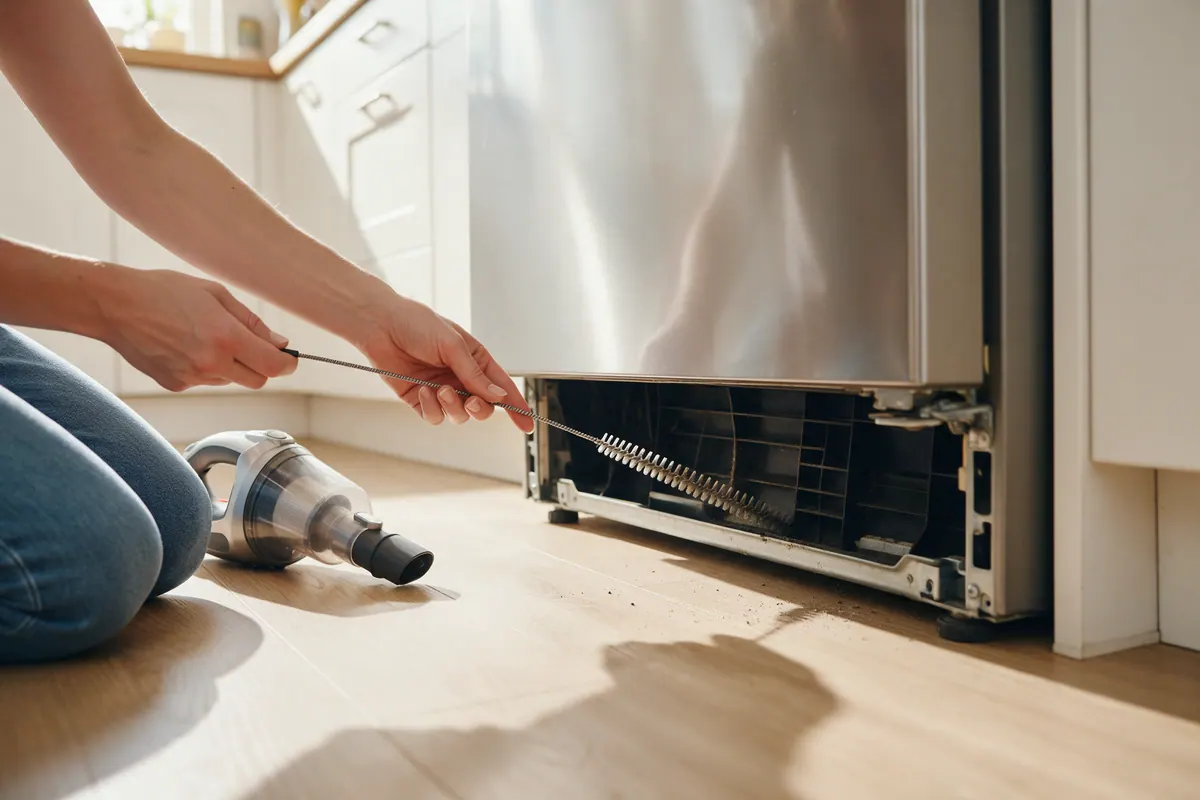
- Where they are: on most modern refrigerators, behind the front kick plate at the bottom; on some older models, on the back.
- How: unplug the refrigerator, remove the kick plate (it usually pulls straight off), and use a long coil brush to loosen dust, then vacuum it up. Be gentle around the fan and the thin coil tubing.
3. Clean and test the door gaskets
Wipe the rubber door seals with warm water and mild dish soap, getting into the folds where crumbs collect, and dry them. Then do the dollar-bill test: close the door on a bill in several places around the door. If it pulls out with no resistance, the gasket is not sealing there. A torn or flattened gasket should be replaced; it is a common, model-specific part.
4. Replace the water filter
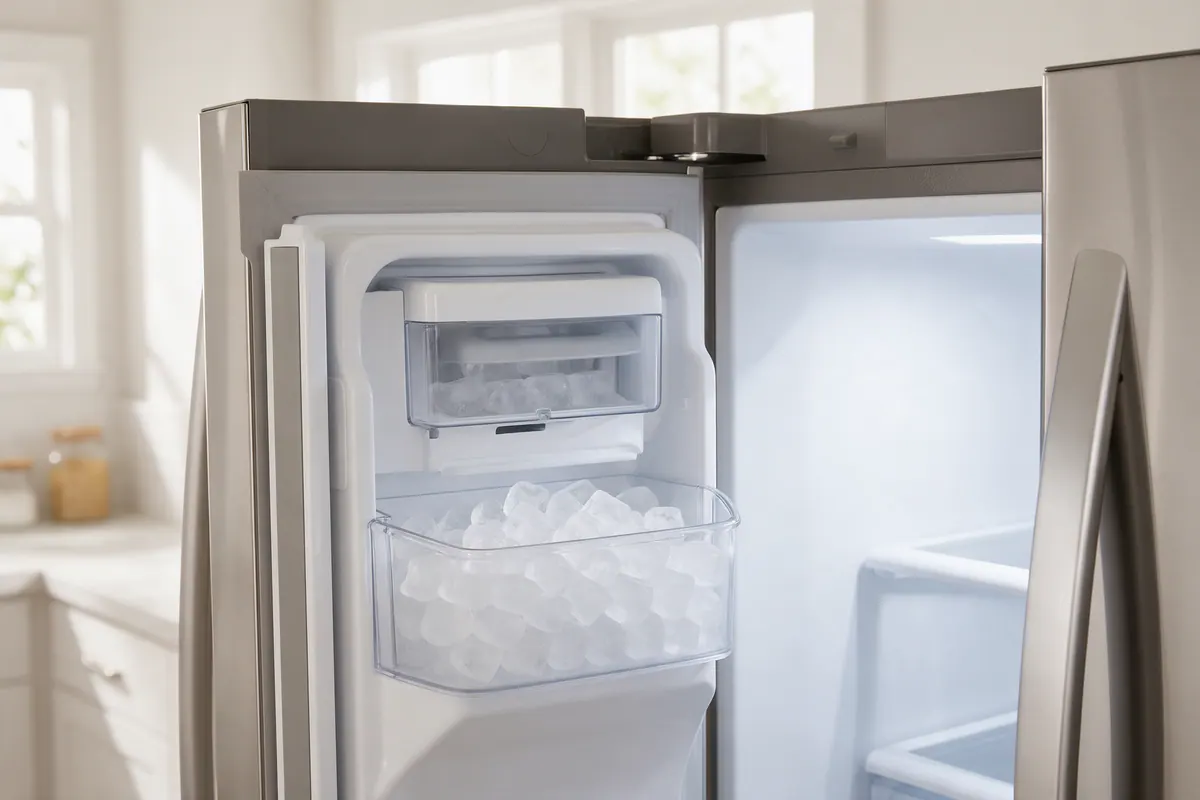
If your refrigerator has a water or ice dispenser, it probably has a filter. Most are rated for about six months or a set number of gallons. Whirlpool, for example, rates its everydrop filters for 6 months or 200 gallons. After installing a new filter, run several gallons through the dispenser to flush out air and loose carbon, and reset the filter light if your model has one.
Use the exact filter model your refrigerator calls for. A filter that does not seal properly can leak or let water bypass the filter.
5. Keep the defrost drain clear
Frost-free refrigerators melt frost off the evaporator coil and send the water down a drain to a pan under the unit, where it evaporates. If that drain clogs, you may see water under the crisper drawers or ice on the back wall of the fresh-food section. Some drains can be cleared with warm water; others need the back panel removed, which is a good point to call a technician.
6. Check level and clearance
A refrigerator that is not level can keep its doors from sealing. Most manufacturers recommend a slight backward tilt so the doors swing closed on their own; check your manual for the exact setup. Also make sure you have left the clearances your manual calls for around the sides and back and that nothing blocks the front grille.
7. Don’t overpack (or underpack) it
Cold air needs to circulate. Blocking the vents between the freezer and fresh-food compartments with food is a common cause of a warm refrigerator with a cold freezer.
8. Inspect the water line
If your refrigerator has an ice maker, inspect the supply line behind it when you clean the coils. Replace plastic lines that look brittle, cracked, or kinked; braided lines are more durable.
Signs it is time for a repair, not more maintenance
- The refrigerator is warm even though the coils are clean and the doors seal
- The compressor clicks on and off repeatedly, or never stops
- Heavy frost builds up on the evaporator panel in the freezer
- You hear loud grinding or buzzing from the back or the freezer fan
- Water keeps pooling under the unit after you have checked the drain and supply line
Problems involving the sealed refrigerant system (compressor, evaporator, condenser, refrigerant) require a certified technician. For the full-home view, see our appliance maintenance calendar.
Step-by-step summary
- Check temperatures. Place an appliance thermometer in the refrigerator and freezer. Adjust controls so the refrigerator stays at or below 40°F (4°C) and the freezer at 0°F (-18°C).
- Clean the condenser coils. Unplug the refrigerator, remove the kick plate or access the rear coils, and clean dust and pet hair with a coil brush and vacuum.
- Clean and test the door gaskets. Wash the gaskets with mild soap and water, then close the door on a dollar bill in several spots. If it slides out easily, that section is not sealing.
- Replace the water filter. Replace the filter on the schedule printed on the filter or in your manual (often about six months), then flush several gallons through the dispenser.
- Clear the defrost drain and drip pan. Look for water pooling under crisper drawers or ice at the back wall of the fresh-food section, signs of a blocked defrost drain. Clean the drip pan if accessible.
- Check level and clearance. Make sure the refrigerator is level side to side, with the slight backward tilt your manual specifies so doors close on their own, and that vents are not blocked.
Tools and supplies mentioned
everydrop by Whirlpool Refrigerator Water Filter 1 (EDR1RXD1)
by everydrop by Whirlpool
Genuine Whirlpool-made filter for refrigerators that take Filter 1. Whirlpool rates it for 6 months or 200 gallons.
Fit check: Only for refrigerators that use Filter 1 (replaces W10295370A). Confirm your filter model in the manual or on the old filter.
Frequently asked questions
What temperature should my refrigerator be set to?
The U.S. FDA recommends keeping the refrigerator at or below 40°F (4°C) and the freezer at 0°F (-18°C). Use an appliance thermometer, because dial settings are not temperatures.
How often should I clean refrigerator coils?
A common recommendation is at least once or twice a year, and more often if you have pets or a dusty home. Always unplug the refrigerator first.
How often should I change my refrigerator water filter?
Most filters are rated for about six months or a set number of gallons; for example, everydrop by Whirlpool rates its filters at 6 months or 200 gallons. Follow the rating for your filter.
Why is my refrigerator running all the time?
Common causes include dirty condenser coils, leaky door gaskets, a door left ajar, an overpacked or very hot kitchen, or a failing fan or defrost component. If cleaning coils and checking seals does not help, have it diagnosed.