How to Clean a Glass-Top Stove Without Scratching It: Burned-On Food, White Haze and Sugary Spills
How to clean a glass-top stove the way GE and Whirlpool say: cooktop cream, a non-scratch pad, a razor scraper at 45 degrees, and fast action on sugar spills.
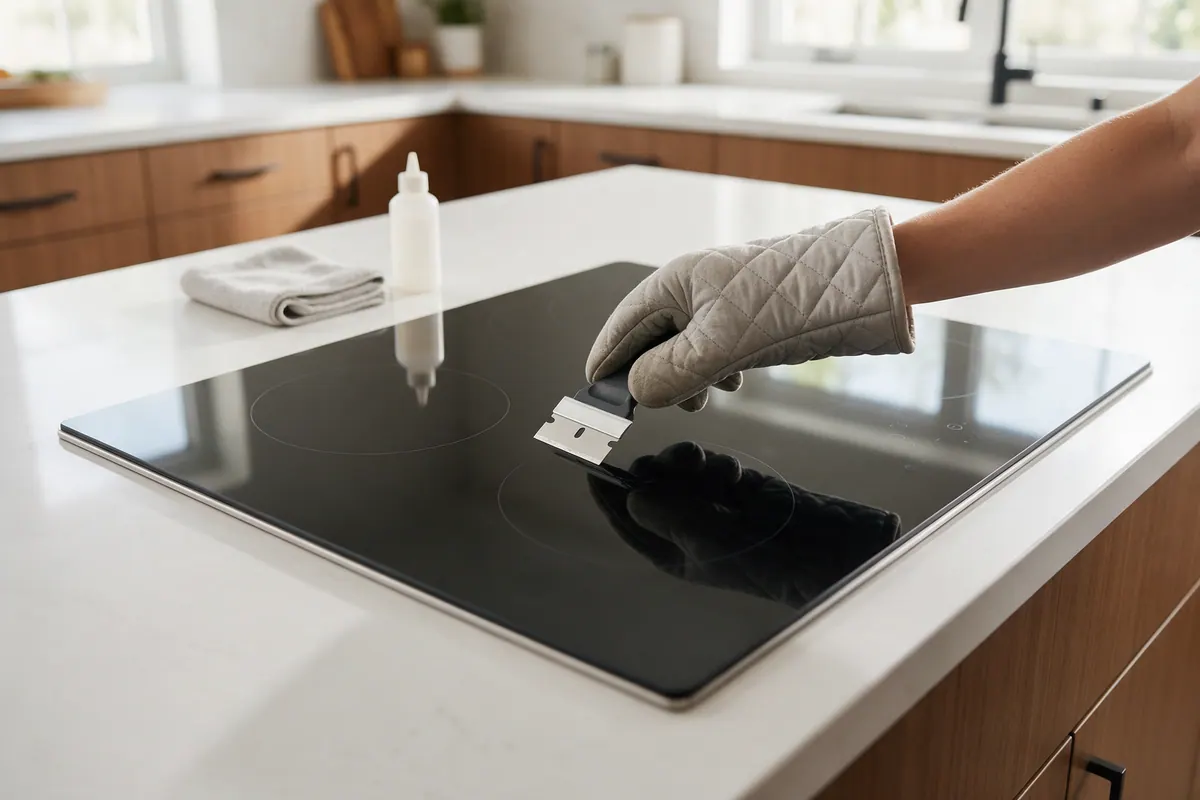
To clean a glass-top stove without scratching it, use a ceramic cooktop cleaning cream, a non-scratch cooktop pad and, for burned-on food, a razor scraper held at about a 45-degree angle, then buff the glass dry. Skip steel wool, abrasive powders, bleach and ammonia, which Whirlpool says can damage the surface. The one mess you should not leave to cool is a sugary boil-over: GE says jelly, fudge, candy and syrup can pit the glass for good unless you scrape them off while still hot.
These steps come straight from GE Appliances’ and Whirlpool’s own cleaning instructions for smooth ceramic glass cooktops, which cover both radiant electric and induction models. The two makers differ on one detail (when to scrape), so both methods are below. Your owner’s manual has the final word for your model.
Quick reference: what to clean and when
| Task | How often | What to use |
|---|---|---|
| Wipe-down with cooktop cream | After cooking, or daily on a busy stove | A few drops of cream, a paper towel or cooktop pad, then a dry cloth |
| Burned-on residue | As it happens, once the glass has cooled (GE) or is warm but not hot (Whirlpool) | Razor scraper at about 45 degrees, cream, cooktop pad |
| Sugary spills or melted plastic | Immediately, while still hot | New single-edge razor scraper, oven mitt, paper towels |
| White haze or metallic sheen | When you notice it | Cooktop cleaning cream |
| Metal marks from pans | When you notice them | Cream, cleaning pad, razor scraper if needed |
| Check pan bottoms for nicks and rough spots | Before holiday cooking and whenever you add a pan | Your fingertips and eyes |
For the rest of your kitchen’s upkeep schedule, see our appliance maintenance calendar.
What to clean a glass-top stove with
GE recommends cleaning the glass before first use and then regularly with an approved ceramic cooktop cleaner, and it names Weiman’s and CeramaBryte. Whirlpool’s method uses its affresh cooktop cleaner or another ceramic glass cooktop cleaner, plus a blue cooktop scrubbing pad and a scraper designed for glass cooktops.
What you need:
- A ceramic glass cooktop cleaning cream.
- A non-scratch cooktop scrubbing pad (not a kitchen scouring sponge).
- A razor scraper made for glass cooktops, with a new, sharp single-edge blade.
- Clean, dry cloths or paper towels and an oven mitt.
GE puts it bluntly: sponges or cleaners other than the ones it recommends can damage the cooktop. That’s the reason this guide doesn’t include baking soda, vinegar or melamine-sponge hacks. Neither maker lists them in its instructions.
One-box option: Weiman Glass & Ceramic Cooktop Cleaner Kit
If you’d rather buy one box than three items, a kit that bundles cream, pads and a scraper covers every step in this guide. The Weiman Glass & Ceramic Cooktop Cleaner Kit includes a cleaning cream, three non-scratch scrubbing pads and a razor scraper, and GE lists Weiman’s among its approved cooktop cleaners. Whichever cleaner you use, follow its label directions, as Whirlpool advises.
How to do the everyday wipe-down
GE’s normal daily cleaning takes about two minutes:
- Let the cooktop cool.
- Shake the cleaning cream and put a few drops on the glass (or a light mist if you use a spray cleaner).
- Rub the whole surface with a paper towel or cooktop cleaning pad.
- Wipe off every bit of residue with a dry cloth or paper towel. There’s no need to rinse.
- Don’t heat the cooktop until the cream is gone.
Doing this regularly is what keeps residue from baking on, so you rarely need the scraper.
How to get burned-on food off a glass-top stove
This is where the two makers’ instructions differ slightly. Both work; pick the one your manual describes.
GE’s method: scrape cooled residue with cream
- Let the cooktop cool.
- Spread a few drops of cleaning cream over the burned-on area.
- Rub it with a cooktop cleaning pad, pressing as needed.
- For heavy residue, hold a razor scraper at about a 45-degree angle against the glass and scrape with firm pressure, keeping a small amount of cream on the residue as you go.
- Remove what’s left with the pad, then polish the whole surface with cream and a paper towel.
Whirlpool’s method: scrape while warm, then clean and polish
- Make sure all controls are off.
- While the cooktop is still warm but not hot to the touch, put on an oven mitt and scrape the residue with a glass-cooktop scraper held at about 45 degrees, pressing firmly.
- Let the cooktop cool completely.
- Apply a few dime-sized drops of cooktop cleaner and rub it in with a cooktop scrubbing pad.
- Let the cleaner dry to a white haze.
- Polish with a clean, dry cloth or paper towel.
- Repeat for stubborn stains.
Whirlpool is honest about the limit here: “Not all stains can be removed.” If a mark survives a few rounds, stop scrubbing harder. Extra force with the wrong tool is how glass gets scratched.
How to clean a sugary spill or melted plastic (do this while it’s hot)
Thanksgiving is when this one bites: cranberry sauce, candied yams, caramel and pecan-pie filling all boil over easily. GE says sugary spills (jellies, fudge, candy, syrups) and melted plastic can pit the glass surface unless removed while still hot, and that pitting is not covered by its warranty.
GE’s steps:
- Turn off all surface units and move hot pans off the cooktop.
- Put on an oven mitt.
- With a new, sharp single-edge razor scraper, push the spill to a cool area of the cooktop.
- Lift it off with paper towels.
- Leave any remaining residue until the cooktop has cooled, then clean it normally.
- Don’t use those surface units again until the residue is completely gone.
What a white haze or metallic sheen means
A rainbow-like or metallic sheen on the glass is mineral deposits from evaporated water and food, according to GE. A cooktop cleaning cream removes it. A white film right after cleaning is just dried cleaner; Whirlpool’s method actually tells you to let the cleaner dry to a haze before you buff it off.
How to remove metal marks and keep the glass from scratching
GE’s prevention advice is mostly about your cookware:
- Lift pans, don’t slide them. Sliding pots across the glass leaves metal marks. Those usually come off with cream, a cleaning pad or a razor scraper.
- Don’t let thin aluminum- or copper-clad pans boil dry. The overlay can leave a black discoloration. Remove it right away, before heating that spot again, or it may become permanent.
- Check pan bottoms. Nicks, gouges and rough areas scratch the glass. Retire or reserve rough-bottomed pans for another cooking surface.
- Expect speckles from soft-metal pans. Patterned speckles that seem to change color are residue picked up from copper or aluminum pans, GE says, and happen much less with harder stainless steel. Cream and a razor scraper remove them.
If you own an induction cooktop, the same glass-care rules apply. Our portable induction cooktop guide covers which pans work on induction.
Signs your glass cooktop needs a repair, not a cleaning
Cleaning can’t fix damage to the glass itself. Call a qualified technician if you see:
- Pitting or indentations in the surface. GE says the cooktop glass has to be replaced, and that takes a service visit.
- Plastic or teapot porcelain bonded to the glass after it hardened. GE says it usually can’t be removed and the glass will need replacing.
- A crack or chip of any size. Stop using the cooktop until it has been inspected.
- An element that won’t heat or won’t turn off after cleaning. That’s an electrical problem, not a dirt problem.
If your oven is also acting up before the holiday, our guide to an electric oven not heating walks through the checks, and how to clean your oven before the holidays covers the oven cavity and self-clean, which this guide doesn’t.
Step-by-step summary
- Turn every element off. Make sure all controls are off before you clean. For everyday cleaning and baked-on residue, let the glass cool first.
- Scrape heavy residue at 45 degrees. Hold a razor scraper made for glass cooktops at about a 45-degree angle and press firmly to lift burned-on food. GE keeps a little cream on the residue as you scrape; Whirlpool scrapes while the glass is warm but not hot, wearing an oven mitt.
- Rub in cooktop cleaner with a non-scratch pad. Apply a few dime-sized drops of ceramic cooktop cleaner and rub with a cooktop scrubbing pad, using firm pressure on stubborn stains.
- Let it haze, then polish dry. Let the cleaner dry to a white haze, then buff it off with a clean, dry cloth or paper towel. Don't turn the cooktop on until the cream is wiped off.
- Repeat for stubborn stains. Repeat scraping, cleaning and polishing as needed. Whirlpool notes that not every stain can be removed.
Tools and supplies mentioned
Weiman Glass & Ceramic Cooktop Cleaner Kit (cream, 3 scrubbing pads, razor scraper)
by Weiman
One box with all three things the maker instructions call for: a ceramic cooktop cleaning cream, non-scratch scrubbing pads and a razor scraper. GE names Weiman's among the approved cooktop cleaners.
Fit check: For smooth glass, ceramic and induction cooktops. Check your owner's manual for any cleaner your maker specifically requires.
Frequently asked questions
Can you use a razor blade on a glass-top stove?
Yes. Both GE and Whirlpool tell owners to use a razor scraper made for ceramic glass cooktops, held at about a 45-degree angle with firm pressure. Use a new, sharp single-edge blade and keep the scraper flat to the surface rather than digging in with a corner.
What should you not use on a glass-top stove?
Whirlpool says not to use steel wool, abrasive powder cleansers, chlorine bleach, rust remover or ammonia on a ceramic glass cooktop. GE adds that sponges or cleaners other than the ones it recommends can damage the cooktop.
Why does my glass cooktop have a white haze or metallic sheen?
GE says areas with a metallic sheen are mineral deposits left by evaporated water and food. A ceramic cooktop cleaning cream removes them. A light white haze right after cleaning is normal and buffs off with a dry cloth.
What happens if sugar boils over on a glass-top stove?
GE warns that sugary spills such as jelly, fudge, candy or syrup can pit the glass permanently unless removed while still hot, and that pitting is not covered by its warranty. Turn off the element, move the pan, put on an oven mitt, and push the spill to a cool area with a razor scraper.
Can melted plastic be removed from a glass cooktop?
Sometimes, if it hasn't hardened. GE says to treat it like a hot sugar spill, but plastic or teapot porcelain that has hardened onto the glass usually bonds to it, and the glass then has to be replaced by a service technician.
How do you get scratches or metal marks off a glass-top stove?
Gray metal marks from sliding pans usually come off with cooktop cream, a cleaning pad or a razor scraper, according to GE. True scratches and pits in the glass can't be cleaned out, so prevent them by lifting pans and checking pan bottoms for rough spots.