Front-Load vs. Top-Load Washer: Which Is Better for You?
Front-load vs. top-load washers compared on water and energy use, capacity, gentleness, maintenance, and ergonomics, using ENERGY STAR data, to help you choose.
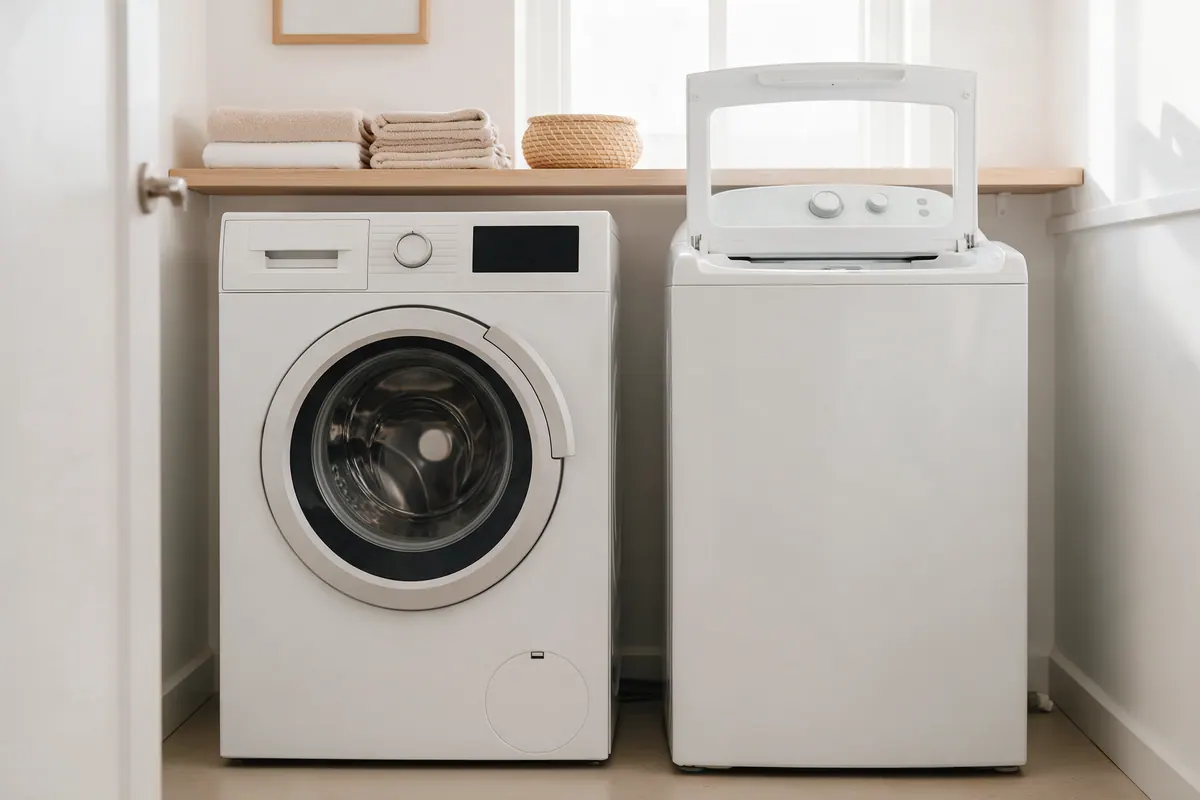
Front-load or top-load is the first fork in the road when you shop for a washer, and there are really three types to compare: front-load, top-load with an agitator (the traditional center post), and high-efficiency top-load with an impeller (a low cone or disc instead of a post). Here is how they stack up, using ENERGY STAR data where numbers matter.
Short answer: front-loaders use the least water and energy and are the gentlest on clothes, but they need a little more care to prevent odors and require bending to load (unless you add pedestals). Top-load impeller washers are a middle ground on efficiency with easier loading. Traditional agitator top-loaders are the simplest and most familiar, but use the most water and energy.
Front-load vs. top-load washers at a glance
| Front-load | Top-load impeller (HE) | Top-load agitator | |
|---|---|---|---|
| Energy and water use (ENERGY STAR) | Lowest: about 50% less than agitator top-loaders, about 25% less than impeller top-loaders | Lower than agitator models | Highest |
| Usable capacity | No agitator, so more room for bulky items | No center post, more room than agitator models | Agitator takes up tub space |
| Gentleness on clothes | Tumbles clothes; gentle | Gentler than an agitator | Agitators can be rough on clothes, per ENERGY STAR |
| Loading | Bend down or add pedestals | Load from standing | Load from standing |
| Stacking | Can stack with a matching dryer (kit) | No | No |
| Odor risk | Higher; tight door seal traps moisture | Lower; leave lid open | Lower; leave lid open |
| Detergent | HE only | HE only | Check manual (many newer models are HE) |
Water and energy: front-loaders win
ENERGY STAR’s numbers are clear. Certified front-load washers use about 50% less energy and water than a top-load agitator washer, and about 25% less than a top-load impeller washer. Across certified models, a full-size ENERGY STAR washer uses about 14 gallons of water per load, compared with about 20 gallons for a standard machine.
Whatever type you buy, ENERGY STAR certification matters: certified washers use about 20% less energy and about 30% less water than regular washers, and ENERGY STAR estimates they can save about $530 in energy costs over the product’s lifetime. When comparing models, ENERGY STAR suggests looking for a higher Integrated Modified Energy Factor (IMEF) and a lower Integrated Water Factor (IWF), both listed in its product finder.
Two habits save more energy than any machine choice: wash in cold water when you can (ENERGY STAR says heating water accounts for about 90% of a washer’s energy use) and run full loads.
Capacity and how clothes are treated
Without a center agitator, both front-loaders and impeller top-loaders have more usable space for bulky items like comforters, which ENERGY STAR notes can mean fewer loads. ENERGY STAR also points out that agitator washers can be rough on clothes, while the tumbling action of high-efficiency washers is gentle enough that many models can handle delicates and hand-washables.
Spin speed matters for drying time too. ENERGY STAR recommends using a high spin speed when appropriate, because it leaves less moisture in clothes and shortens dryer time. Compare maximum spin speeds (rpm) on spec sheets.
Maintenance and odors
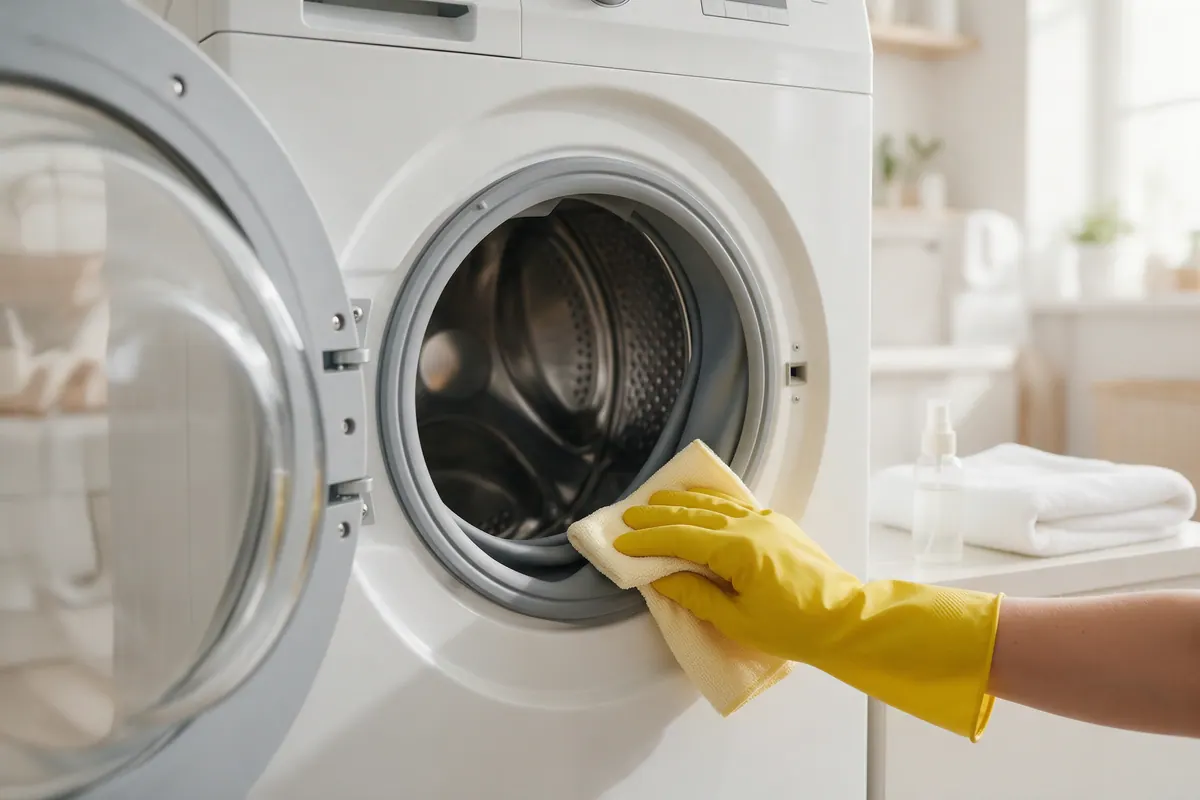
This is the front-loader’s main trade-off. The door seals tightly to hold water, so moisture and residue left behind can lead to musty smells. LG and ENERGY STAR both recommend leaving the door ajar after use so the drum can dry, and Whirlpool recommends a monthly cleaning cycle and HE detergent in the measured amount. None of it is hard, but it is a routine. Our guide to fixing a smelly front-load washer covers the full process.
Front-loaders also have a few parts top-loaders do not: a door lock, a rubber door seal (boot), and on many models a drain pump filter (coin trap) you can clean yourself. Many common front-load error codes trace back to these; see our Whirlpool front-load washer error codes guide.
Ergonomics and space
- Loading: top-loaders load from standing height. Front-loaders require bending, unless you add the manufacturer’s pedestal drawers.
- Stacking: only front-load washers can be stacked with a dryer (using the manufacturer’s stacking kit). That makes them the usual choice for closets and small laundry rooms. ENERGY STAR also lists stackable, under-the-counter, and combination washer-dryer designs.
- Counter space: a front-loader’s top is usable as a folding surface or can sit under a counter. A top-loader needs clearance above for the lid.
Lifespan
The NAHB/Bank of America Home Equity study put the average first-owner life of a washer at about 10 years, without separating front- and top-load models. Use and maintenance matter more than the format; see our appliance lifespan chart.
Which washer should you buy?
Choose a front-load washer if: you want the lowest water and energy use, gentle washing, more capacity in the same footprint, or a stacked or under-counter setup, and you are fine leaving the door open between loads.
Choose a top-load impeller (HE) washer if: you want easier loading from standing height with better efficiency than a traditional top-loader.
Choose a top-load agitator washer if: you value a familiar, simple design and loading convenience over water and energy savings.
Shopping checklist:
- Measure the space, including door swing (front-load) or lid clearance (top-load).
- Look for the ENERGY STAR label and compare IMEF (higher is better) and IWF (lower is better).
- Check the yellow EnergyGuide label for estimated yearly energy cost.
- Compare drum capacity and maximum spin speed.
- For front-loaders, check how the drain pump filter is accessed and whether pedestals or stacking kits are available.
Not sure about a term? Our appliance glossary defines agitators, impellers, door boots, and more.
Frequently asked questions
Do front-load washers use less water than top-load washers?
Yes. ENERGY STAR says certified front-load washers use about 50% less energy and water than top-load agitator washers, and about 25% less than top-load impeller washers. Certified full-size washers use about 14 gallons of water per load, compared with about 20 gallons for a standard machine.
What is the difference between an agitator and an impeller washer?
An agitator is the tall center post in a traditional top-load washer that twists to move clothes through the water. An impeller is a low cone or disc at the bottom of a high-efficiency top-loader; ENERGY STAR notes impeller models use less energy and water than agitator models and leave more room in the tub.
Why do front-load washers smell?
Their doors seal tightly to keep water in, so moisture and detergent residue left behind after a load can cause musty odors. Leaving the door ajar after use, wiping the door seal, using the right amount of HE detergent, and running the cleaning cycle monthly prevent it.
Can you stack a top-load washer and dryer?
No. Stacking requires a front-load washer with a dryer mounted above it using the manufacturer's stacking kit. If you need a vertical setup with a top-loading washer, look at a combined laundry center.
Do I need special detergent for a front-load washer?
Yes. Front-load and high-efficiency top-load washers need low-sudsing HE detergent. Whirlpool warns that regular detergent or too much detergent creates excess suds that can cause leaks, draining problems, and poor rinsing.
Sources
- ENERGY STAR: Clothes Washers (front load vs. top load, water per load, best practices)
- Whirlpool: Removing Odors or Smells - Front Load Washer (HE detergent)
- LG: Troubleshooting Musty Odors (front-load door seal)
- Whirlpool: Error Codes in Front Load Washers
- NAHB / Bank of America Home Equity: Study of Life Expectancy of Home Components (2007)