Front-Load Washer Smells? How to Get Rid of the Odor for Good
A musty or mildew smell in your washer usually comes from trapped moisture and detergent residue. Here's how to clean it out and keep the odor from coming back.
A musty, mildewy smell in a front-load washer almost always comes from the same place: moisture and detergent residue trapped inside a machine that seals tightly. The fix is a one-time deep clean followed by a few habits that keep the drum dry. Here is the process, based on Whirlpool, LG, and ENERGY STAR guidance.
Why front-load washers smell
Front-load doors are designed to make a watertight seal. LG explains that keeping the door closed between washes traps moisture and detergent residue, which creates an environment for odor-causing microbes. The usual contributors:
- Laundry left in the drum after the cycle ends. Whirlpool notes wet clothes left in the washer can lead to mildew in both the clothes and the machine.
- A closed door and detergent drawer between loads.
- Too much detergent or fabric softener, or non-HE detergent. Whirlpool says overdosing speeds up residue buildup that can cause odor.
- Only cold-water washes. Whirlpool recommends using warm or hot settings sometimes, because they better control residue buildup.
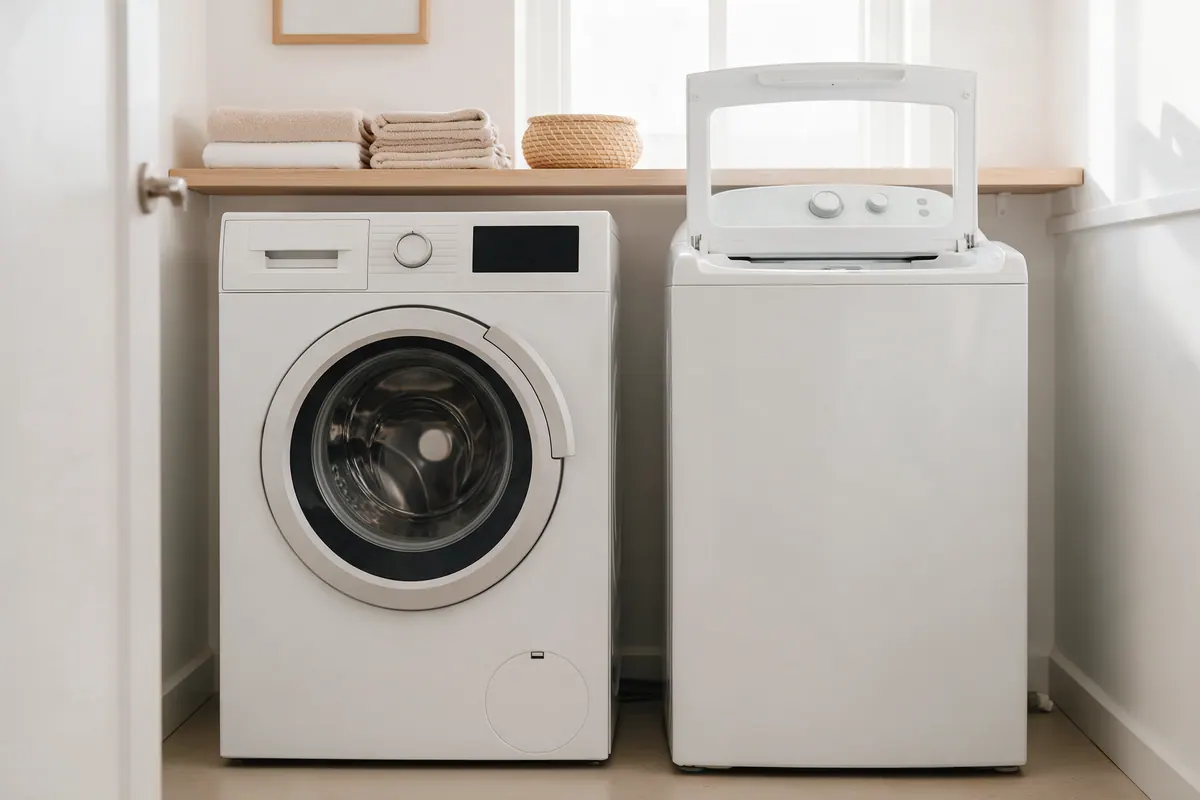
Top-load washers can smell for the same reasons, and the same steps apply. Leave the lid open between loads.
Step 1: Run the cleaning cycle
Most washers have a Clean Washer, Tub Clean, or similar cycle. Run it with the drum empty.
- Whirlpool recommends running Clean Washer at least monthly or every 30 wash cycles, using an affresh washer cleaner tablet placed in the drum (not the dispenser) or, as an alternative, 1 cup of liquid chlorine bleach. Do not use thickened, easy-pour, or no-splash bleach, and do not add detergent. Afterward, run a Rinse & Spin cycle.
- LG recommends Tub Clean with an oxygen-based drum cleaner one to two times a month, and warns that chlorine bleach or acidic cleaners can discolor or corrode the inside of the machine.
The brands disagree on bleach, so use the cleaner your owner’s manual specifies. When the cycle ends, leave the door open so the drum dries.
Step 2: Clean the door seal
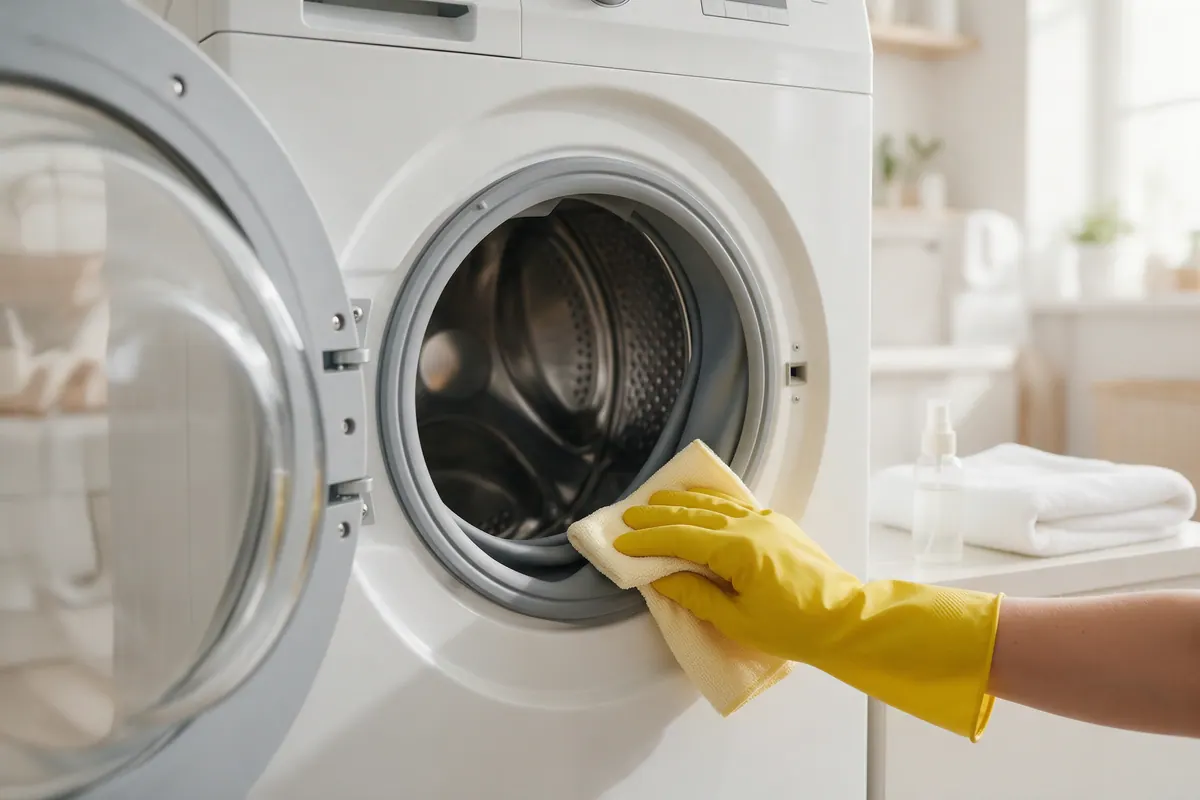
The rubber door seal (also called the door boot or gasket) traps water, lint, hair, and residue in its folds, and that is often where the smell lives.
- Open the door and pull back the folds of the seal all the way around.
- Remove hair, lint, and anything caught in the bottom of the seal.
- Wipe out residue with a cloth and the cleaner your manual recommends, using a soft brush in the creases.
- Dry the seal with a clean cloth.
After this deep clean, a quick wipe of the bottom fold after the last load of the day prevents buildup.
Step 3: Clean the detergent dispenser
Detergent and softener residue builds up in the drawer and its housing. Whirlpool says to remove and clean the dispenser drawer regularly following your manual, and LG recommends cleaning it weekly. Most drawers release with a tab or “PUSH” button; scrub with a brush, rinse, dry, and reinstall.
Step 4: Clean the drain pump filter
Many front-load washers have a drain pump filter (coin trap) behind a small panel at the lower front. Lint, coins, and gunk collected there can hold stagnant water and smell. Check your manual for the location and procedure. Put down towels and a shallow pan first, because water will come out when you open it. Remove debris, then reinstall the filter firmly so it does not leak.
Step 5: Change the habits that cause odor
The deep clean fixes today’s smell. These habits keep it from coming back:
- Use HE detergent, measured. Whirlpool specifies HE detergent only and says never to use more than the recommended amount.
- Unload promptly. Move laundry to the dryer as soon as the cycle ends, and do not store damp towels in the washer.
- Leave the door and dispenser drawer open between loads. ENERGY STAR suggests leaving the door ajar for an hour or two after use so moisture can evaporate. Keep children from climbing into the open machine.
- Use warm or hot water occasionally, per Whirlpool, rather than cold only.
- Repeat the cleaning cycle monthly, or on the schedule in your manual. It is on our maintenance calendar.
Sewer smell: if it smells like sewage
A sewage or rotten-egg smell usually points to the drain rather than the drum. LG lists a drain hose pushed too far into the drainpipe as one cause of odor. Check that the drain hose is installed the way your manual shows (Whirlpool specifies a standpipe height between 39 and 96 inches for its front-load washers) and that the hose is not sealed tightly into the pipe. If the smell comes from the floor drain or standpipe itself, it may be a plumbing issue for a plumber.
When to call a pro
If the smell returns within days after a full cleaning, or you see standing water in the drum after a cycle, the washer may not be draining completely. Drain-related error codes are covered in our Whirlpool front-load washer error code guide and the error code hub. Choosing a new washer? See our front-load vs. top-load comparison.
Step-by-step summary
- Run the washer's cleaning cycle. With the drum empty, run Clean Washer, Tub Clean, or the equivalent cycle with the cleaner your manual specifies, then leave the door open to dry.
- Clean the door seal. Pull back the folds of the rubber door seal and wipe out residue, lint, and hair, then dry it.
- Clean the detergent dispenser. Remove the dispenser drawer per your manual, scrub off detergent and softener residue, rinse, and dry it.
- Clean the drain pump filter. If your washer has a drain pump or coin-trap filter, drain it into a shallow pan, remove debris, and reinstall it securely.
- Change the habits that cause odor. Use the measured amount of HE detergent, remove wet laundry promptly, and leave the door and dispenser open between loads.
Frequently asked questions
Why does my front-load washer smell like mildew?
Front-load washers seal tightly to keep water in, so moisture and detergent residue left inside after a load can grow odor-causing microbes. LG lists laundry left in the drum, a closed door and detergent drawer between loads, and too much detergent or fabric softener as common causes.
How often should I run the clean washer cycle?
Whirlpool recommends its Clean Washer maintenance procedure at least once a month or every 30 wash cycles, whichever comes first. LG recommends running Tub Clean with a drum cleaner one to two times a month.
Can I use bleach to clean my washer?
It depends on the brand. Whirlpool allows 1 cup of liquid chlorine bleach in its Clean Washer cycle (not thickened or no-splash bleach), while LG says chlorine bleach or acidic cleaners can discolor or corrode the drum and recommends an oxygen-based cleaner. Follow your owner's manual.
Does too much detergent make a washer smell?
Yes. Whirlpool says using more than the recommended amount of HE detergent increases the rate at which detergent and soil residue build up inside the washer, which can cause odors. Measure detergent instead of eyeballing it.
Is it safe to leave the washer door open?
Leaving the door open between loads lets the drum dry and is recommended by Whirlpool, LG, and ENERGY STAR. Make sure children cannot climb into the open washer; LG and ENERGY STAR both include that caution.