Dishwasher Not Cleaning Dishes? 8 Fixes Before Holiday Hosting
Dishes still dirty or wet after a cycle? Check the filter, spray arms, water temperature, detergent, rinse aid, and loading before you call a technician.
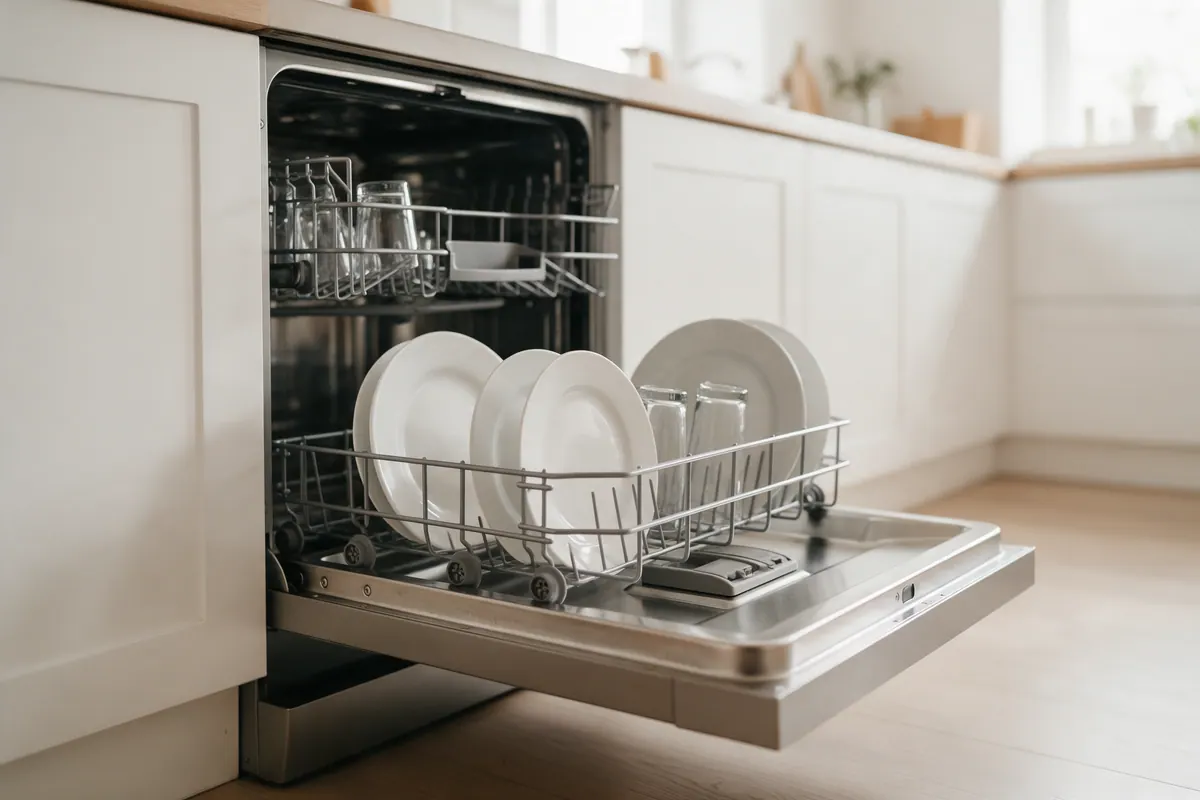
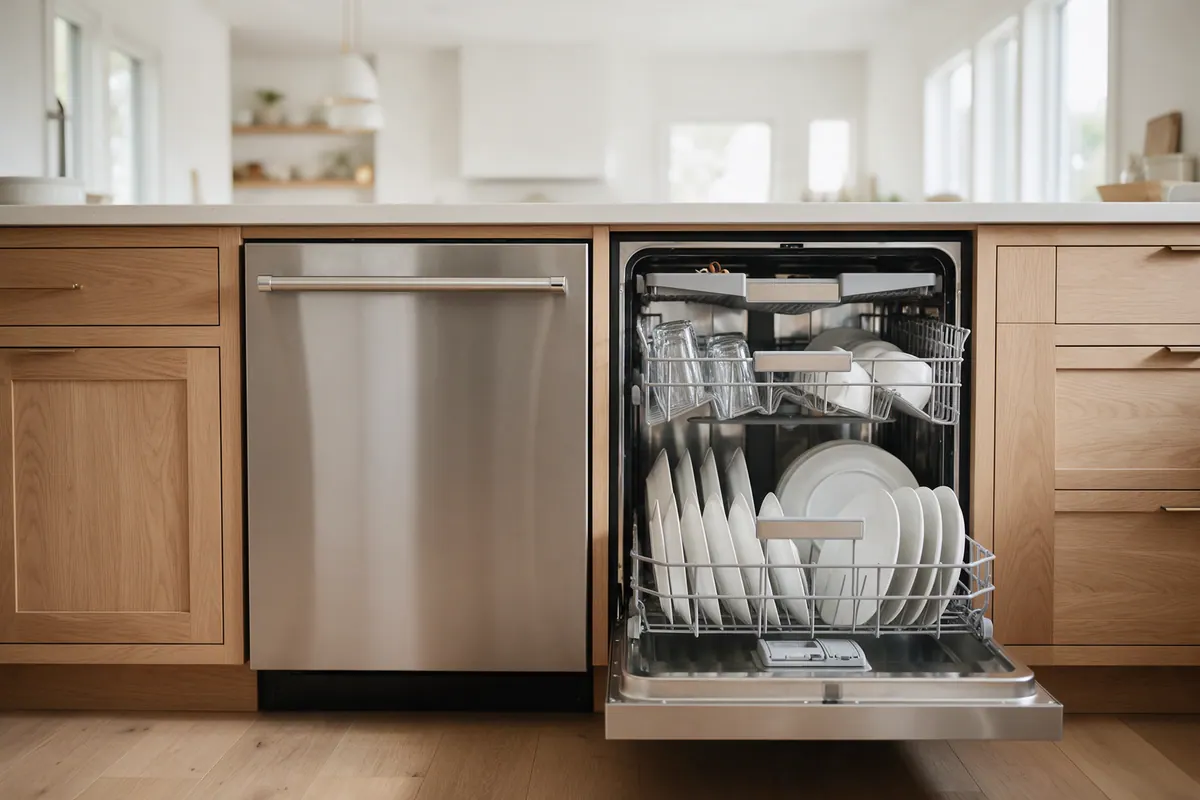
Dishes that come out still dirty or greasy usually point to a clogged filter, blocked spray arms, cool inlet water, weak detergent or missing rinse aid, or a load that blocks the spray pattern. Wet plastics after an otherwise clean cycle are often a drying issue, not a wash failure. Work through the checks below in order. Most take under an hour and fix the problem before holiday hosting piles up.
If standing water is the main symptom rather than dirty dishes, start with our dishwasher not draining guide first, then come back here.
Quick guide: what the symptom points to
| What you notice | Check first |
|---|---|
| Food stuck on lower-rack dishes | Filter, lower spray arm free to spin, heavy cycle |
| Food stuck on upper-rack dishes | Middle or upper spray arm nozzles, loading that blocks the arm |
| White film or cloudy glasses | Hard water, rinse aid empty, dishwasher needs an interior clean |
| Suds or foam in the tub | Hand dish soap or too much detergent; stop the cycle and clear suds |
| Clean glassware, wet plastics | Normal for plastic; rinse aid plus Extra Dry or Sanitize if available |
| Everything dirty after a short cycle | Heavier or high-temp cycle; confirm 120°F inlet water |
1. Clean the dishwasher filter
A dirty filter recirculates food onto the next load. Whirlpool says clean the filter about once a month with frequent use, or every two weeks if you run the machine daily. GE says removable fine and ultra-fine filters should be cleaned about once a month. LG publishes a frequency table that depends on how many loads you run and whether you scrape dishes before loading.
- Open the door, pull out the bottom rack, and find the filter at the floor of the tub.
- On many Whirlpool models, turn the upper filter assembly about a quarter turn counterclockwise and lift it out, then lift the lower filter from the circular opening.
- Rinse under warm running water. Use a soft brush for stuck soil. Do not use a wire brush or scouring pad; Whirlpool and LG both warn that abrasives can damage the mesh.
- Reinstall until the filter locks. Whirlpool says not to run the dishwasher without the filters properly installed, and LG notes that a poorly seated filter can leave dishes dirty.
Link this to your maintenance calendar so a monthly filter clean does not slip before Thanksgiving and Christmas hosting.
2. Clear clogged spray-arm nozzles
If the arms cannot spin or the jets are plugged, whole sections of the rack stay dirty. GE says a constant tapping noise or one zone of dirty dishes often means a blocked arm. Whirlpool says to spin the middle spray arm by hand before every cycle and rearrange anything that stops it.
- With the racks out or slid forward, spin each arm a full turn by hand.
- If nozzles look clogged, remove the arm the way your manual describes (many lower arms pull up; upper arms often unthread a nut).
- Clear blocked holes with a toothpick, paper clip, or pin. GE and LG both suggest a fine pointed tool; do not enlarge or scratch the jets.
- Rinse the arm, pour water through it if you can, reinstall it, and confirm it turns freely.
Also confirm you did not select a Top Rack Only or single-zone wash. Whirlpool and GE both note that those modes leave the unused rack’s spray arms off.
3. Confirm hot water at about 120°F
Cool fill water is one of the most common reasons detergent fails to dissolve. GE says the water heater should deliver at least 120°F to the dishwasher, and Whirlpool says incoming hot water of 120°F (49°C) works best for cleaning and drying.
- Confirm the dishwasher is on the hot water line, not the cold line (GE lists a cold connection as a top installation mistake).
- Run the kitchen hot faucet until the water is hot. Measure it with a kitchen thermometer.
- Start the dishwasher immediately so the first fill is hot. GE also says to avoid running the dishwasher right after a shower or bath has used up the hot water.
- Whirlpool’s water-pressure range for filling is 20 to 120 psi (138 to 828 kPa); GE lists the same range. Very low pressure can leave the tub underfilled and the wash weak.
4. Use automatic detergent and keep rinse aid filled
Whirlpool recommends high-quality pre-measured tablets or packs in the main dispenser with the lid closed, and says liquid rinse aid improves both drying and wash results while limiting hard-water film. GE likewise says to use automatic dishwasher detergent only, not hand dish soap, and to match detergent amount to water hardness.
- Empty any old powder that has clumped in a humid cabinet; Whirlpool says fresh detergent cleans better.
- Fill only the main wash compartment unless your manual calls for a pre-wash dose of powder or gel.
- Keep the rinse-aid dispenser topped up. Bosch says rinse aid lowers water’s surface tension so droplets sheet off and dishes dry faster.
- If you see suds when you open the door, Whirlpool says someone may have used hand dish soap. Stop the cycle, let the foam settle, and clear it before restarting with the correct detergent.
For hard water at 15 grains per gallon or more, Whirlpool strongly recommends a softener; mineral scale on spray arms and the tub makes good cleaning much harder.
5. Scrape, load with space, and face soil toward the arms
You do not need to pre-wash until plates look clean. Whirlpool says scraping large particles is enough, and that habitual pre-washing can etch glassware over time as detergent attacks already-clean dishes. GE still says to scrape before loading so food does not overwhelm the filter.
- Scrape plates into the trash or disposal; leave cooked-on soil for a heavy cycle.
- Angle dishes so soiled surfaces face down and inward toward the spray arms.
- Leave gaps between items. Overloading is one of Whirlpool’s top causes of leftover food.
- Keep tall utensils, cutting boards, and pan handles from blocking an arm. GE lists those as common blockers of the lower spray arm.
- On many Whirlpool models, put plastics on an upper or third rack so they are less likely to warp near high heat.
6. Pick a heavier or high-temperature cycle
A short Eco or Light cycle will not strip baked lasagna pans. GE says if food remains after a short cycle, choose a longer one, and use Added Heat, Hot Start, or similar boost options when available. Whirlpool says a high-temperature wash option raises the main wash temperature for tough, baked-on soil.
- Match the cycle to the soil: Normal for everyday plates, Heavy or Pots for casseroles and greasy pans.
- Add Sanitize when you want a hotter final rinse. Bosch notes that Sanitize on its models raises final-rinse time and temperature and also improves drying.
- After you change cycles, filter, and loading, run one full load before you decide the machine needs parts.
7. If dishes are clean but still wet, fix drying
Condensation drying (common on Bosch and many Energy Star machines) heats the final rinse, then lets moisture condense on the cooler tub wall. It is normal for some water to remain on plastics. Bosch recommends Finish Jet-Dry for everyday drying and Extra Dry or Sanitize for a stronger result, and says to pull the lower rack out first so upper-rack drips do not rewet clean dishes.
- Confirm rinse aid is filled and set high enough if dishes stay wet (Bosch says raise the setting when drying is weak; lower it if you see streaks).
- Select Extra Dry or Sanitize when your model offers them.
- Leave the door cracked open after the cycle if your model does not auto-open (some Bosch AutoAir models open on their own when level and unobstructed).
- Give plastics extra time, or towel-dry them; they simply do not hold heat like glass and porcelain.
For a deeper look at premium drying features when you are shopping, see our Bosch 500 vs. 800 Series dishwasher comparison.
8. Deep-clean the interior about once a month
Film, grease, and hard-water scale inside the tub and hoses drag down wash performance even after you clean the filter. Whirlpool says dishwashers should be cleaned about every 30 days and recommends a dishwasher cleaner such as Affresh, or a white vinegar rinse for spots and film.
- Clear large debris from the filter and sump first.
- Place a dishwasher cleaner tablet per the package directions (often on the tub floor or in an empty detergent cup).
- Run a Normal or empty cleaning cycle with hot inlet water.
- Wipe the door gasket and the edge of the tub dry so trapped moisture does not smell before guests arrive.
When it’s probably not a DIY fix
Call a qualified technician if:
- The heating element or temperature sensor may have failed (cycles run very long, dishes stay cool, or a heat-related error code appears). Whirlpool lists a failed heater or sensor as a cause of persistently cold wash water.
- The wash motor hums but spray arms never turn, or you hear grinding from the pump after the filter is clean.
- The tub underfills even with good household water pressure and a fully open shutoff valve.
- There is an active leak, burning smell, or scorched wiring.
For readers in Maryland or Northern Virginia, see our recommended repair service if DIY checks do not restore cleaning performance.
Otherwise, a local appliance technician who services your brand can test the heater, inlet valve, and circulation pump without guesswork. Compare repair versus replacement costs on our repair or replace guide if the machine is near the end of its expected life.
Step-by-step summary
- Clean the filter. Remove the bottom rack, twist or lift out the filter assembly per your manual, rinse it under warm water, and scrub stubborn debris with a soft brush. Reinstall until it locks; do not run the dishwasher without the filter seated.
- Clear the spray-arm nozzles. Spin each spray arm by hand. If a nozzle is clogged, clear it with a toothpick or paper clip without enlarging the hole, rinse the arm, and confirm it rotates freely.
- Confirm hot inlet water. Run the kitchen hot tap until the water is hot, then check it with a thermometer. GE and Whirlpool both call for about 120°F (49°C) at the dishwasher inlet. Start the cycle right after so the first fill is hot.
- Use the right detergent and rinse aid. Use only automatic dishwasher detergent in the main dispenser, and keep the rinse-aid dispenser filled. Do not use hand dish soap, which creates foam that ruins wash performance.
- Reload and pick a heavier cycle. Scrape large food off plates, leave space between items, face soil toward the spray arms, and avoid blocking the arms. For baked-on soil, choose a heavier or high-temperature cycle instead of a short light wash.
- Improve drying on the next load. Keep using rinse aid, select Sanitize or Extra Dry if your model has them, and unload the lower rack first so upper-rack drips do not wet clean dishes below.
Tools and supplies mentioned
Affresh Dishwasher Cleaner Tablets, 6 count
by Affresh
Whirlpool recommends monthly use of a dishwasher cleaner such as Affresh to cut film, odor, and mineral buildup that hurts wash performance. Place one tablet per the package directions and run a Normal cycle.
Fit check: Safe for all dishwasher makes and models per the maker; follow the tablet instructions and do not use hand dish soap.
Frequently asked questions
Why are my dishwasher dishes still dirty after a full cycle?
The most common causes are a clogged filter that recirculates food, spray-arm nozzles blocked by debris, cool inlet water that will not activate detergent well, the wrong detergent, or a load that blocks the spray arms. Clean the filter and arms first, then check water temperature and loading.
How often should I clean my dishwasher filter?
Whirlpool says about once a month with frequent use, or every two weeks for a large household that runs the machine daily. GE says about once a month for removable fine filters. LG's schedule depends on how many loads you run and whether you scrape dishes before loading.
What water temperature does a dishwasher need?
GE says the water heater should deliver at least 120°F to the dishwasher, and Whirlpool says incoming hot water of 120°F (49°C) works best for cleaning. Run the kitchen hot faucet until the water is hot before you start a cycle.
Why are plastic dishes still wet when everything else is dry?
Plastic does not hold heat the way glass and porcelain do, so water evaporates more slowly from it. Bosch notes that plastics are harder to dry and recommends rinse aid plus Extra Dry or Sanitize when available. Whirlpool suggests keeping plastics on upper racks away from the hottest zone on many models.
Can I use hand dish soap in a dishwasher?
No. Whirlpool warns that hand dish soap creates suds that can push water out of the tub, cause leaks, and leave dishes dirty. Use only detergent made for automatic dishwashers.
Sources
- Whirlpool Product Help: Dishes are not Clean
- Whirlpool Product Help: How to Clean the Dishwasher Filters
- Whirlpool Product Help: Dishwasher Water Temperature Troubleshooting
- Whirlpool Product Help: Spray Arm Not Working
- GE Appliances: Dishwasher - Poor Wash Performance
- GE Appliances: Dishwasher - Lower Spray Arm Not Spinning
- Bosch: Tips to Maximize Drying With Your Dishwasher
- LG USA Support: How to Clean Your Dishwasher Filter
- LG USA Support: Spray Arm Maintenance